
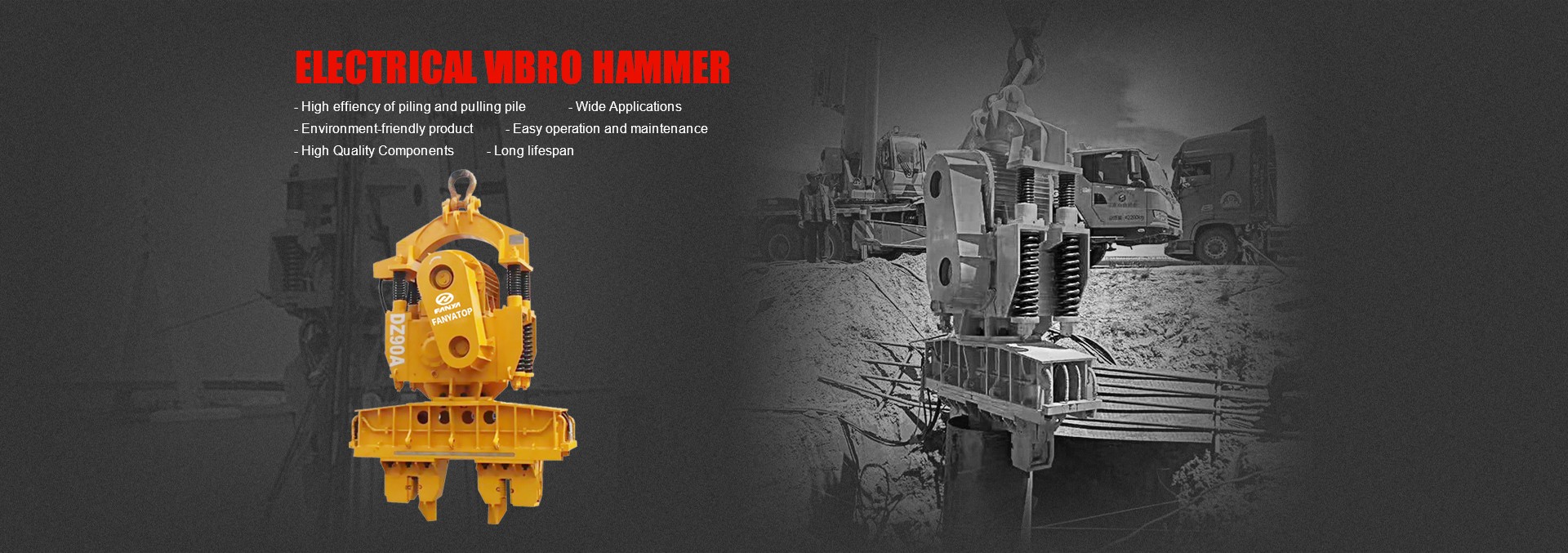
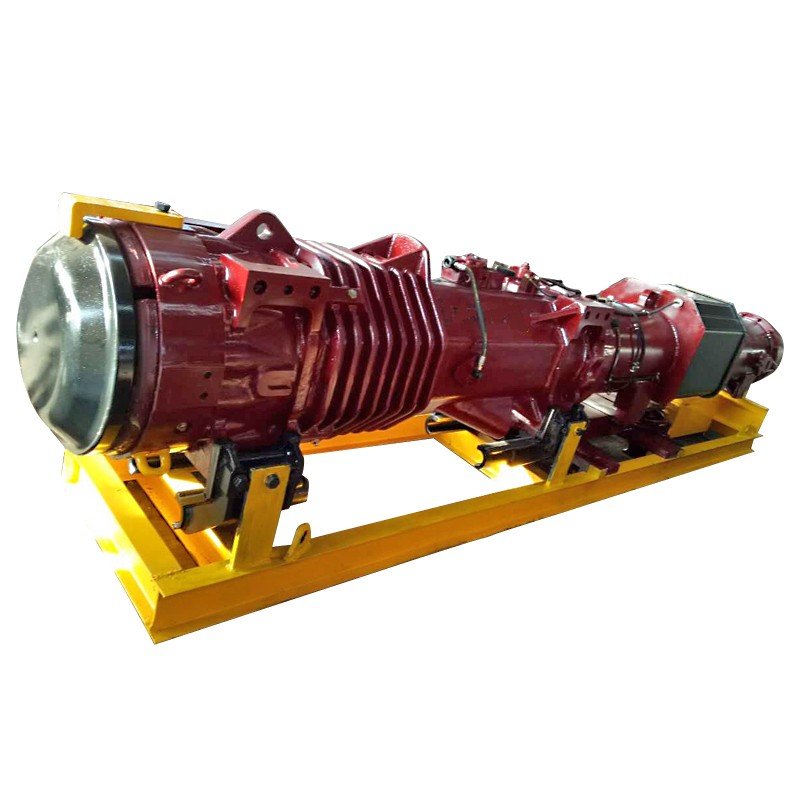
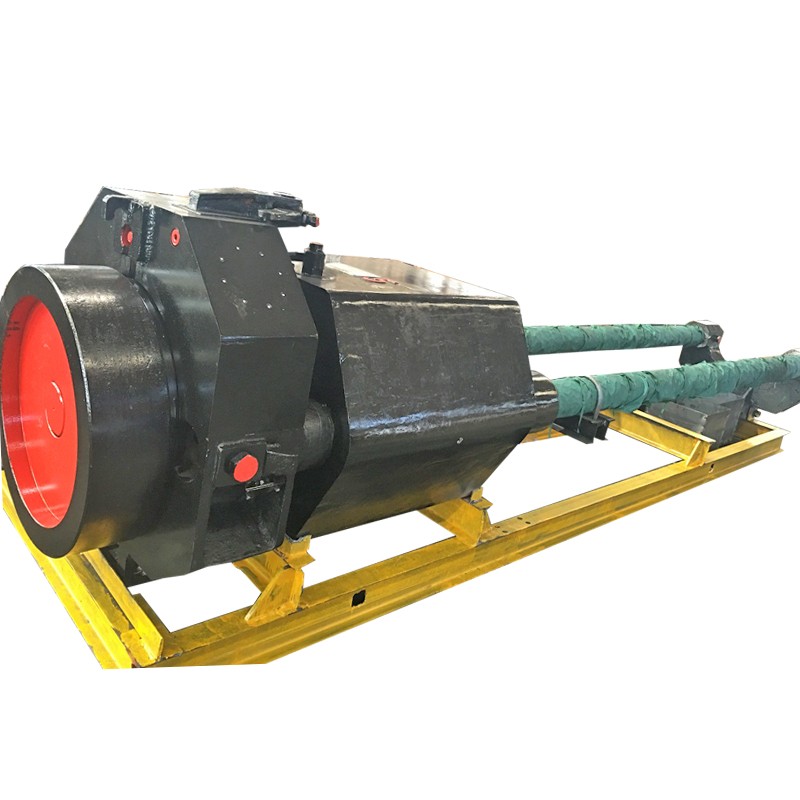
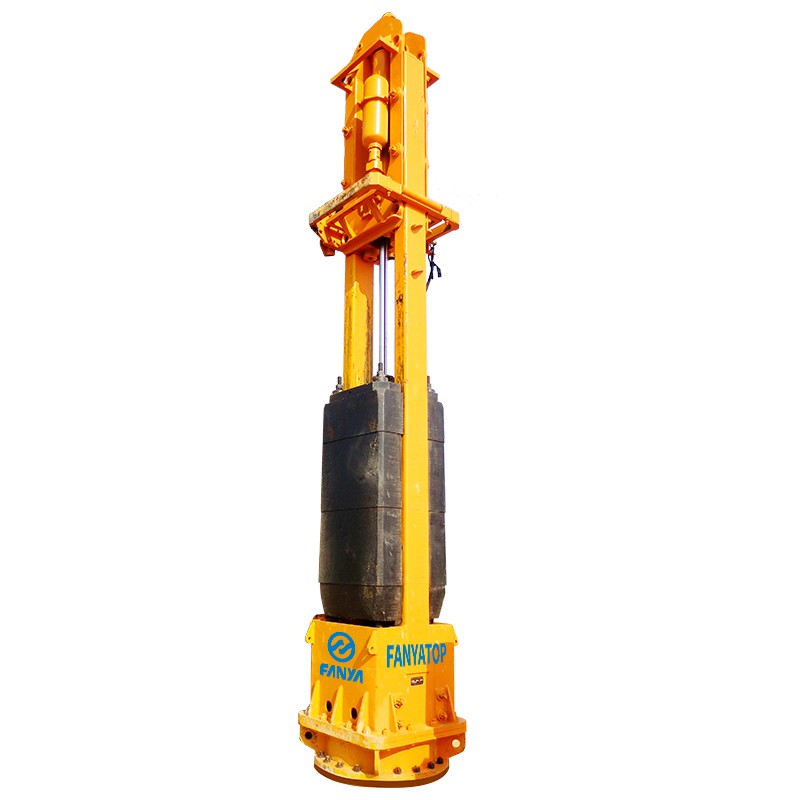
Have you ever watched a diesel pile driving hammer struggle to drive a pile on a cold morning, only to see it over-drive the next one, causing structural damage? If you work in foundation engineering, you know the frustration. The truth is, traditional diesel hammers are reaching their limits. At XUZHOU FANYA IMPORT&EXPORT CO.,LTD, we've seen the shift: the future is hydraulic. This blog explains why upgrading your diesel hammer to a hydraulic system is not just an option—it's a necessity for efficiency, compliance, and profitability.
Pain Point 1: Inconsistent Energy Output
Imagine a project in Alberta, Canada. The temperature drops to -30°C. Your diesel hammer's fuel combustion becomes erratic, delivering energy that varies by up to 30% from blow to blow. The result? Pile refusal on some blows and over-driving on others, leading to costly rework and schedule delays. The cost: up to $50,000 per day in idle crew and equipment, plus the risk of pile damage.
Solution: Closed-Loop Hydraulic Control
Hydraulic hammers from XUZHOU FANYA use a closed-loop control system that adjusts ram velocity in real-time, delivering consistent energy regardless of temperature or soil conditions. Our HHP-180 model, for example, maintains energy output within ±2% across all operating conditions. This eliminates pile refusal and over-driving, saving you time and money.
Pain Point 2: High Maintenance Downtime
A construction firm in Texas reported that their diesel hammer required a full top-end rebuild every 600 hours of operation. Each rebuild took 40 hours and cost $15,000 in parts and labor. Over a year, that's 10 days of downtime and $150,000 in maintenance—plus lost revenue from delays.
Solution: Modular Design with Quick-Change Wear Parts
Our hydraulic hammers feature a modular design with quick-change wear parts. The ram, cylinder, and seals can be replaced in under 2 hours without specialized tools. The HHP-180 has a service interval of 2,000 hours, reducing annual maintenance costs by 70%. One client in Norway reduced their downtime from 15% to 2% after switching.
Pain Point 3: Environmental Compliance Risks
In California, strict emission regulations limit diesel hammer operations. A contractor faced $25,000 in fines for exceeding noise limits near a residential area. Additionally, diesel exhaust contains particulate matter that can cause health issues for workers.
Solution: Integrated Emission Control and Sound Attenuation
Our hydraulic hammers are electric-powered or use Tier 4 final diesel engines with DPF and SCR systems, reducing NOx and PM by 90%. The HHP-180 operates at 85 dB(A) at 7 meters, well below typical limits. Plus, the closed hydraulic system eliminates external oil leaks, meeting EPA SPCC requirements.
Customer Case Studies
Case 1: Norway Offshore Wind Foundation
Company: NorthWind Foundations AS (Bergen, Norway)
Challenge: Driving 4-meter diameter monopiles in variable seabed conditions.
Solution: Two XUZHOU FANYA HHP-240 hydraulic hammers.
Result: 40% faster installation, 15% reduction in pile weight due to precise energy control. Quote from Project Manager Erik Larsen: "The consistency of the HHP-240 cut our installation time by a third. The energy control is phenomenal."
Case 2: Texas Bridge Construction
Company: Lone Star Pile Driving Inc. (Houston, Texas)
Challenge: Meeting noise limits near a residential area while driving H-piles.
Solution: One HHP-180 with sound attenuation package.
Result: Noise levels under 80 dB(A), zero complaints. Pile driving accuracy improved by 25%. Quote from CEO Mike Thompson: "We were skeptical, but the HHP-180 ran quieter than our old diesel and never once caused a pile to refuse."
Case 3: Alberta Oil Sands
Company: Canadian Foundations Ltd. (Fort McMurray, Alberta)
Challenge: Extreme cold (-40°C) causing diesel hammer failures.
Solution: Two HHP-180 units with cold-weather package.
Result: 100% uptime during winter. Energy output consistent within 1%. Quote from Operations Director Sarah Chen: "The hydraulic hammer started instantly at -40°C. We got three months of work done in two."
Case 4: Australian High-Rise
Company: Down Under Piling (Sydney, Australia)
Challenge: Driving 900mm piles in dense sandstone.
Solution: One HHP-300 with high stroke capability.
Result: 50% faster penetration rate. Reduced fuel consumption by 30%. Quote from Lead Engineer James Wong: "The HHP-300 is a beast. It cut through sandstone like butter."
Case 5: California Seismic Retrofit
Company: CalEarth Construction (San Francisco, California)
Challenge: Meeting strict emission and noise regulations near a hospital.
Solution: One HHP-180 with Tier 4 engine and sound enclosure.
Result: Zero violations. Project completed 2 weeks early. Quote from Project Manager Lisa Park: "The HHP-180 was the only hammer that met all our environmental requirements without sacrificing performance."
Applications and Partnerships
Our hydraulic hammers are used in deep foundations, offshore wind, bridge construction, and seismic retrofitting. We partner with global procurement firms like Bechtel, AECOM, and Kiewit, who have integrated our hammers into their equipment fleets. XUZHOU FANYA has a dedicated team of sales engineers available 24/7 for technical support and custom solutions.
FAQ
Q1: How does the hydraulic hammer achieve consistent energy output in cold weather?
A: Our system uses a heated hydraulic oil reservoir and a variable-displacement pump that maintains viscosity and pressure. The controller adjusts ram stroke based on feedback from an accelerometer, ensuring each blow delivers the same energy regardless of temperature.
Q2: What is the typical lifespan of a hydraulic hammer compared to a diesel one?
A: A hydraulic hammer from XUZHOU FANYA has a design life of 10,000 operating hours before major overhaul, while diesel hammers typically need rebuilds every 2,000 hours. The hydraulic system also has fewer wearing parts—no fuel injectors, glow plugs, or exhaust valves.
Q3: Can I retrofit my existing diesel hammer to hydraulic?
A: Yes, we offer retrofit kits for most popular diesel hammer models. The kit includes a hydraulic power unit, control system, and modified ram. Installation takes 2-3 days and can be done on-site.
Q4: How does the hydraulic hammer handle variable soil conditions?
A: The control system uses a soil resistance algorithm that adjusts energy per blow based on real-time penetration resistance. In soft soil, it reduces energy to prevent over-driving; in hard soil, it increases energy to maintain progress.
Q5: What are the noise levels compared to a diesel hammer?
A: Our standard hydraulic hammer operates at 85 dB(A) at 7 meters, while a typical diesel hammer is 105-110 dB(A). With our optional sound enclosure, levels drop to 78 dB(A). This meets most municipal noise ordinances.
Conclusion
Upgrading your diesel pile driving hammer to a hydraulic system from XUZHOU FANYA IMPORT&EXPORT CO.,LTD delivers consistent performance, lower maintenance, and environmental compliance. You reduce costs, increase uptime, and improve safety. Ready to make the switch? Download our technical white paper on hydraulic hammer selection or contact our sales engineering team for a personalized consultation. Visit our website or call +86-516-xxxx-xxxx.