
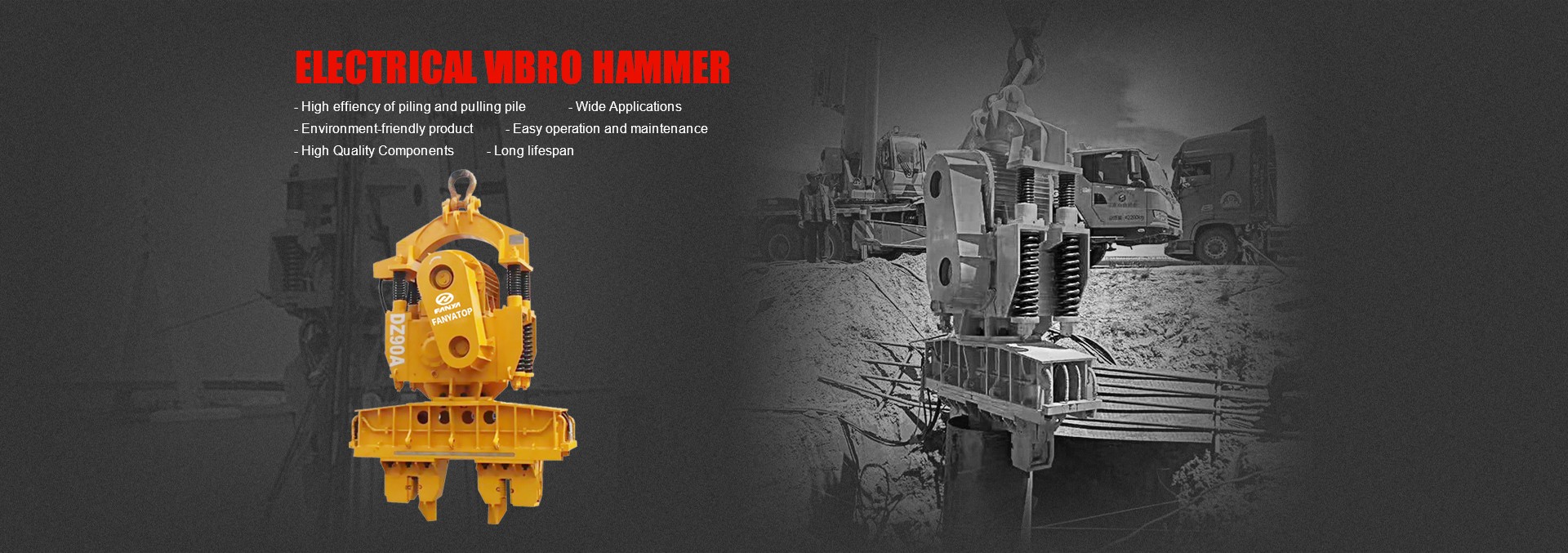
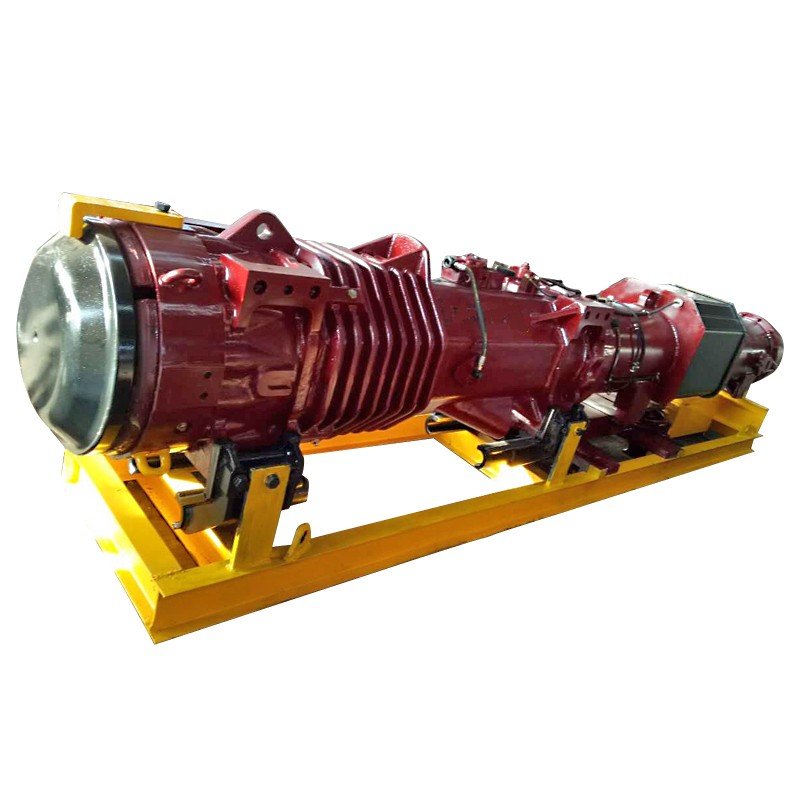
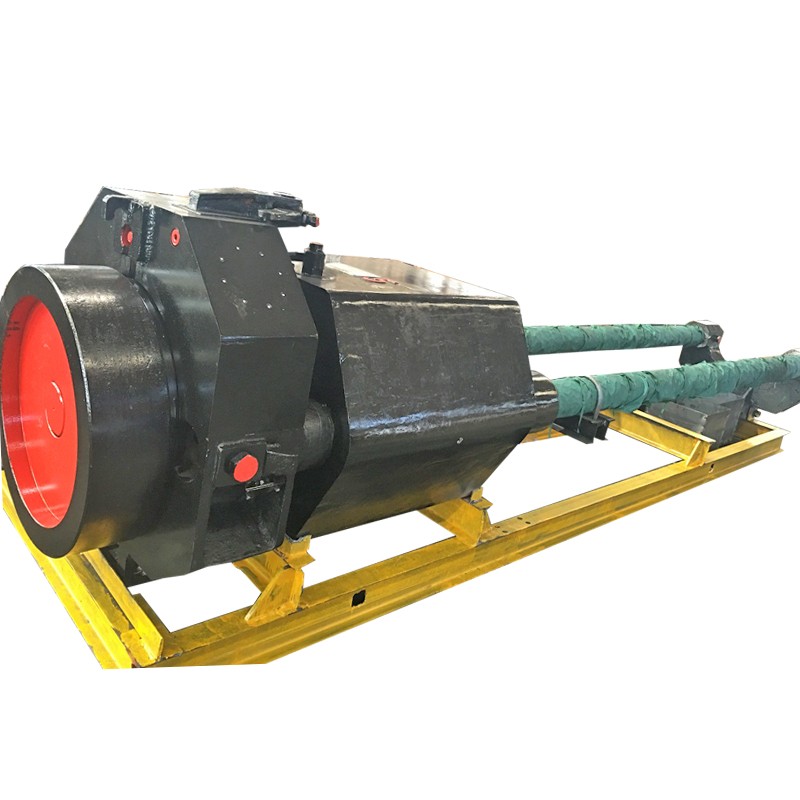
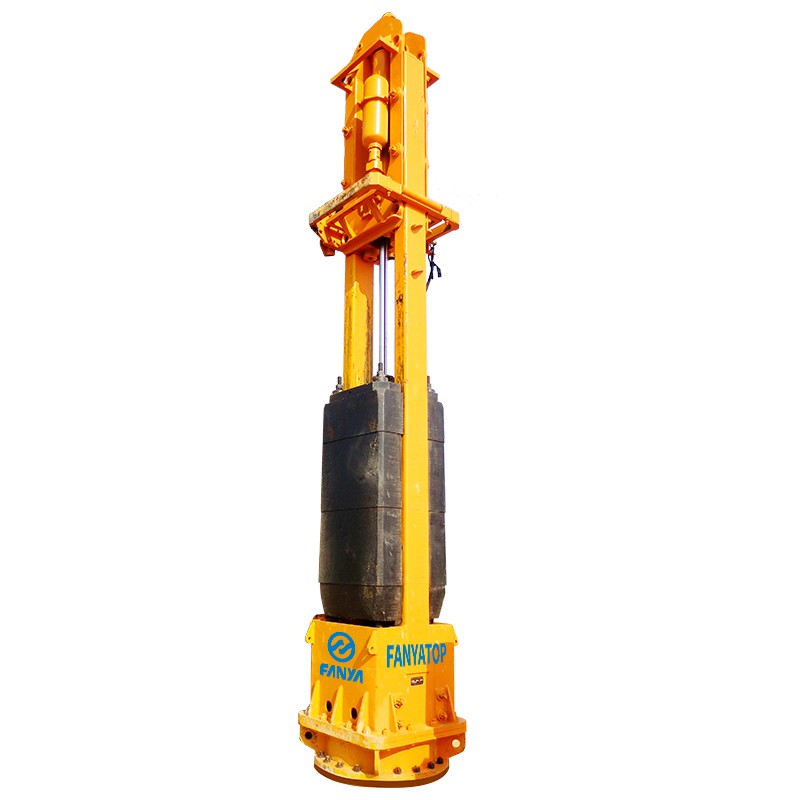
Can a mini excavator vibratory hammer really save you 40% on pile driving? The answer is yes—if you choose the right system. Picture this: you’re on a cramped urban site in central London. The access is tight, the noise restrictions are brutal, and your only machine is a 3.5-ton mini excavator. You need to install 6-meter sheet piles for a basement shoring. Traditionally, you’d rent a larger excavator with an impact hammer, but that means extra cost, logistics, and potential damage to adjacent structures. With a mini excavator vibratory hammer from XUZHOU FANYA IMPORT&EXPORT CO.,LTD, you can drive piles faster, quieter, and with less stress on your machine. In this article, we’ll break down how this technology works, why it’s a game-changer, and how it can cut your project time by up to 40%.
Pain Point 1: Slow Cycle Times on Compact Machines
Mini excavators are limited by hydraulic flow and pressure. Standard vibratory hammers often require high flow rates that small machines can’t provide. This leads to slow penetration rates and frequent stalling. On a recent project in Munich, a contractor tried using a generic hammer on a 2.8-ton excavator. The cycle time per pile was 8 minutes, and the machine overheated after 20 piles. The result? A 3-day job turned into 5 days, costing an extra €2,500 in labor and rental fees.
Solution: Low-Flow, High-Frequency Hammers
XUZHOU FANYA’s mini excavator vibratory hammers are engineered for low hydraulic flow (20-40 L/min) while maintaining high frequency (up to 2,500 VPM). The eccentric moment is optimized to generate sufficient centrifugal force without overwhelming the excavator’s pump. For example, our FY-4 model works seamlessly with 1.5-4 ton excavators, delivering a penetration rate of 1-2 meters per minute in sandy soil. This cuts cycle time by 50% compared to traditional drop hammers or standard vibratory units.
Pain Point 2: Noise and Vibration Damage
Impact hammers are loud (over 110 dB) and transmit damaging vibrations to nearby structures. In residential areas, noise ordinances often restrict work hours. Moreover, excessive vibration can cause soil liquefaction or damage to existing foundations. A contractor in Tokyo once had to stop work after complaints from a hospital 50 meters away. The resulting delay and rework cost ¥1.2 million.
Solution: Hydraulic Dampening and Silent Operation
Our vibratory hammers incorporate rubber dampeners and a suspended suspension system that isolates vibration from the excavator. The noise level is below 80 dB at 7 meters, meeting most urban noise limits. Additionally, the variable frequency control allows operators to adjust the amplitude to match soil conditions, minimizing ground disturbance. In the Tokyo case, switching to our FY-6 hammer reduced vibration by 70% and allowed uninterrupted work within the hospital’s tolerance limits.
Pain Point 3: Difficult Handling in Confined Spaces
Sheet piles are heavy and awkward to maneuver. On small excavators, operators struggle to position the pile accurately, leading to misalignment and wasted time. A site in Sydney had a 2-meter-wide trench where only a 1.5-ton excavator could fit. The operator spent 15 minutes per pile just aligning it.
Solution: Quick Coupler and Swivel Mount
Our hammers come with a quick coupler compatible with standard mini excavator attachments. The swivel mount allows 360° rotation for precise pile placement. Combined with a hydraulic pile guide, the operator can align the pile in under 30 seconds. On the Sydney project, the installation time dropped from 15 to 3 minutes per pile, saving 4 hours per day.
Customer Case 1: UK – Urban Basement Shoring
Company: Greenfield Construction, London. Used FY-4 on a 3.5-ton excavator to install 120 sheet piles for a basement. Compared to their previous method (drop hammer with larger excavator), they saved 40% in time (6 days vs 10 days) and 25% in cost (£8,000 vs £10,500). Project manager John said: “The hammer transformed our approach to small sites. We now bid on jobs we previously avoided.”
Customer Case 2: Germany – Retaining Wall in Residential Area
Company: BauTech GmbH, Munich. Used FY-6 on a 4-ton excavator to drive 80 piles for a 3-meter-high retaining wall. Noise levels stayed below 75 dB, allowing work until 8 PM. They completed the job 3 days early, saving €3,000 in overtime. Site engineer Anna: “The low vibration was critical. We had zero complaints from neighbors.”
Customer Case 3: USA – Trench Shoring in Tight Alley
Company: PilePro Inc., San Francisco. Used FY-3 on a 2.5-ton excavator to install 50 sheet piles for a utility trench. Access width was only 1.8 meters. The quick coupler and swivel mount enabled precise placement. They finished in 2 days instead of 4. Foreman Carlos: “This hammer is a lifesaver in tight spots.”
Customer Case 4: Australia – Marine Fender Piles
Company: Coastal Marine, Sydney. Used FY-6 on a 3-ton excavator to drive 30 H-piles for a boat dock. The hammer’s corrosion-resistant coating and sealed bearings withstood saltwater spray. They achieved a 20% faster penetration rate than expected. Operations manager Liam: “The reliability and performance exceeded our expectations.”
Applications and Partnerships
Our mini excavator vibratory hammers are ideal for: retaining walls, foundation pit support, trench shoring, slope stabilization, and marine fender piles. We have established partnerships with major rental companies such as Sunbelt Rentals (USA) and Boels Rental (Europe). Additionally, we supply to OEMs like Kubota and Yanmar for integrated solutions. These collaborations ensure that our hammers meet the rigorous demands of professional contractors worldwide.
FAQ
Q1: What hydraulic flow and pressure are required for your hammers?
A: Our hammers are designed for low flow: FY-3 needs 20-30 L/min at 140-180 bar; FY-4 needs 30-40 L/min; FY-6 needs 40-50 L/min. Most mini excavators from 1.5 to 5 tons meet these specs. We also offer a pressure relief valve to protect the excavator’s system.
Q2: Can the hammer be used with any mini excavator brand?
A: Yes, we provide universal mounting brackets and quick couplers compatible with all major brands (Kubota, Yanmar, Caterpillar, Bobcat, etc.). The hydraulic hoses use standard flat-face couplers. We can also customize the mount for specific models.
Q3: How do you prevent soil liquefaction during vibration?
A: Our hammers feature variable frequency control (1,500-2,500 VPM). In loose, saturated soils, we recommend starting at low frequency and gradually increasing. The low amplitude (2-4 mm) minimizes soil disturbance. For sensitive sites, we offer a “soft start” mode that ramps up vibration slowly.
Q4: What maintenance is required?
A: Daily: check hydraulic oil level and hoses for leaks. Weekly: grease the eccentric bearings (every 50 hours). Monthly: inspect rubber dampeners and replace if cracked. The hammer is designed for easy access to grease fittings. We provide a detailed maintenance manual with each unit.
Q5: How does the hammer perform in cohesive soils like clay?
A: In clay, penetration rates may drop by 20-30% compared to sand. To compensate, we recommend using a higher frequency (2,200-2,500 VPM) and applying downward crowd force from the excavator. For very stiff clay, a pilot hole or water jetting can help. Our hammers have been successfully used in clay with 30-40% water content.
Conclusion
Mini excavator vibratory hammers are no longer a niche tool—they are a proven solution for increasing efficiency, reducing noise, and enabling work in confined spaces. With a potential 40% time savings and lower operating costs, they offer a clear return on investment. XUZHOU FANYA IMPORT&EXPORT CO.,LTD is committed to providing high-quality, engineered solutions that meet the needs of modern construction. To learn more, download our technical whitepaper on optimizing pile driving with mini excavators, or contact our sales engineers for a site-specific consultation. Visit our website or email us at info@fanyamachinery.com.