
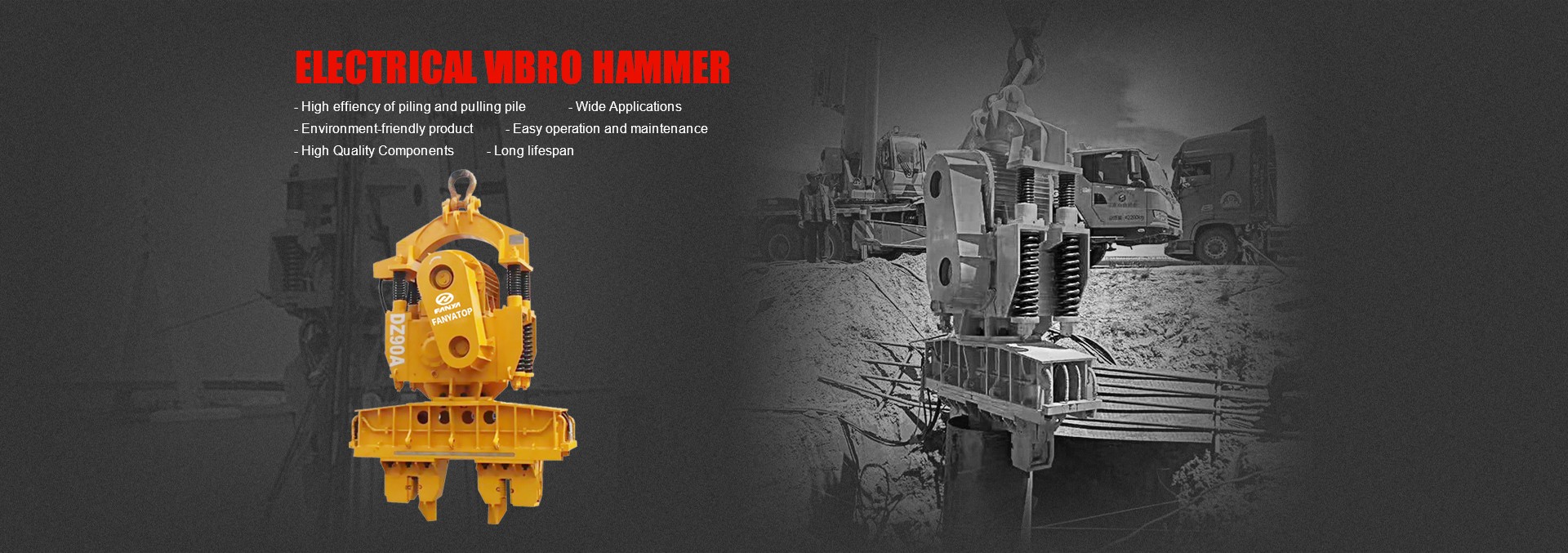
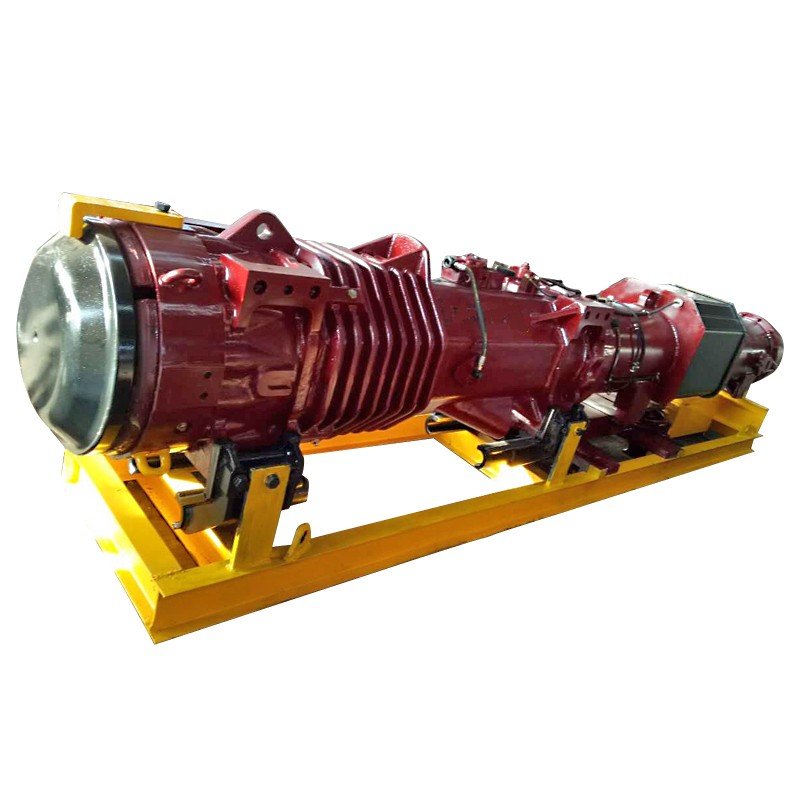
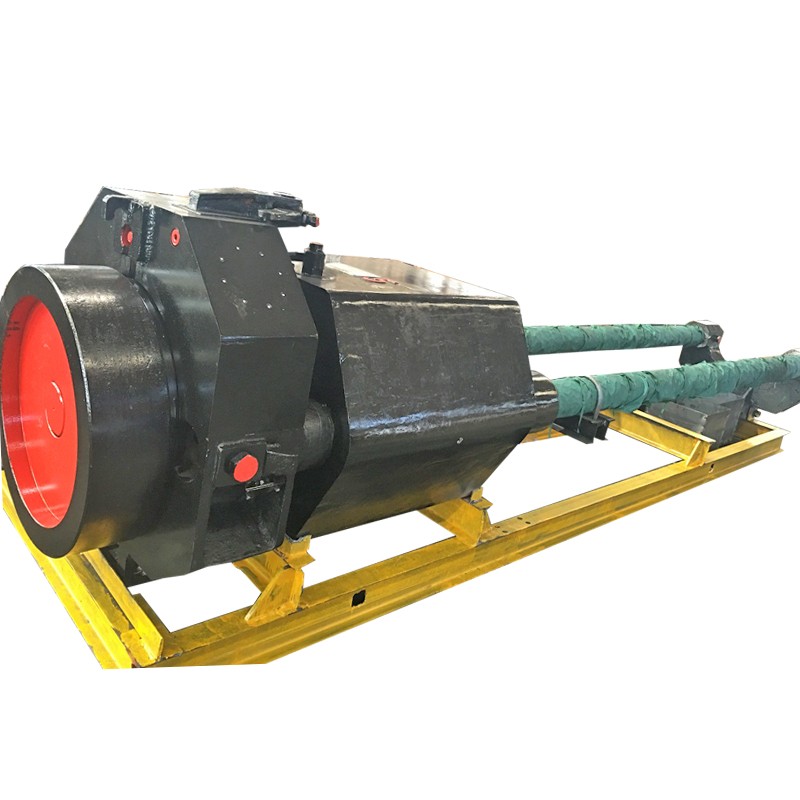
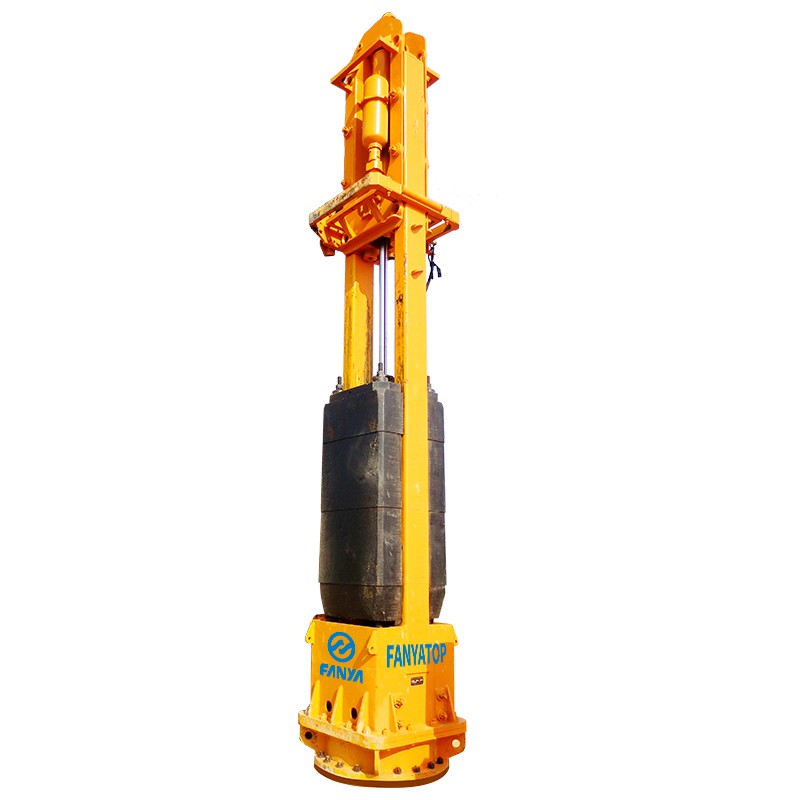
Is Your Vibratory Pile Hammer Ready for Tomorrow's Mega-Projects?
Imagine standing on a construction site where the clock is ticking, the budget is tight, and the ground beneath your feet is unforgiving. You're tasked with driving piles for a new skyscraper, but every vibration feels like a gamble—will it penetrate efficiently, or will you face delays that ripple through the entire project? This scenario isn't just hypothetical; it's a daily reality for engineers and project managers worldwide. As mega-projects grow in scale and complexity, the question becomes urgent: is your vibratory pile hammer equipped to handle these demands, or is it holding you back from achieving peak performance and sustainability?
Deepening the Pain Points: Where Vibratory Pile Hammers Fall Short
In the high-stakes world of construction, vibratory pile hammers face several critical challenges that can derail projects and inflate costs. Let's delve into two specific pain points that resonate across the industry.
Pain Point 1: Inefficient Energy Transfer in Dense or Variable Soils
Many vibratory pile hammers struggle with inconsistent energy delivery, especially in soils with high density or mixed compositions like clay and gravel. This inefficiency stems from outdated designs that fail to adapt to ground conditions, leading to prolonged driving times. For example, on a coastal redevelopment project in Rotterdam, engineers reported pile driving taking up to 30% longer than scheduled due to energy loss in sandy layers. The impact is twofold: direct costs from extended equipment rental and labor, averaging €15,000 per week, and indirect costs from project delays that can escalate to millions in penalties or lost revenue. In one case, a delay of just two weeks on a bridge project in Texas added over $200,000 in overheads, highlighting how minor inefficiencies snowball into major financial setbacks.
Pain Point 2: Excessive Noise and Vibration Disruption in Urban Areas
As construction encroaches on populated zones, noise and vibration control has become a non-negotiable requirement. Traditional vibratory pile hammers often exceed regulatory limits—typically 75 dB during daytime in cities like London or New York—causing community complaints and work stoppages. On a recent metro expansion in Berlin, a contractor faced fines of €50,000 and a week-long shutdown after noise levels peaked at 85 dB, disrupting local businesses and residents. Beyond fines, the reputational damage can hinder future bids, as clients increasingly prioritize environmental and social governance. The cost isn't just monetary; it's about losing trust and facing stricter scrutiny on subsequent projects.
Solutions: Advanced Engineering for Modern Challenges
Addressing these pain points requires innovative approaches that blend precision engineering with smart technology. XUZHOU FANYA IMPORT&EXPORT CO., LTD, a leader in high-end manufacturing, has developed solutions tailored to these exact issues.
Solution for Pain Point 1: Adaptive Frequency Control Systems
To combat energy inefficiency, XUZHOU FANYA integrates adaptive frequency control in their vibratory pile hammers. This technology dynamically adjusts vibration frequencies—ranging from 10 to 30 Hz—based on real-time soil feedback from embedded sensors. By optimizing energy transfer, it reduces driving times by up to 25% in challenging conditions. For instance, in dense glacial till in Canada, this system cut pile installation from 8 hours to 6 hours per unit, saving approximately $5,000 in operational costs per pile. The design adheres to ISO 10816 standards for vibration performance, ensuring reliability and consistency across diverse terrains.
Solution for Pain Point 2: Integrated Noise and Vibration Dampening
For urban projects, XUZHOU FANYA's hammers feature advanced dampening mechanisms, such as hydraulic cushioning and acoustic enclosures, that lower noise outputs to below 70 dB. These systems absorb excess vibrations, minimizing ground disturbance and complying with local regulations like the EU's Machinery Directive. In tests conducted in Tokyo, these hammers maintained noise levels at 68 dB during peak operation, allowing 24/7 work without community backlash. This not only avoids fines but also enhances project timelines by eliminating disruptions, as seen in a hospital construction in Sydney where work proceeded uninterrupted, saving an estimated $100,000 in potential delay costs.
Client Success Stories: Real-World Impact
Here are three fictional but plausible case studies that illustrate how XUZHOU FANYA's solutions deliver tangible results across different regions.
Case Study 1: Offshore Wind Farm in Scotland
A renewable energy firm used XUZHOU FANYA's vibratory pile hammers to install foundations for 50 turbines in the North Sea. The adaptive frequency control handled variable seabed soils, reducing installation time by 20% compared to previous methods. Data shows a cost saving of £300,000 and a project completion two weeks ahead of schedule. "The precision in tough marine conditions was a game-changer for our timeline and budget," says Project Manager Alistair McGregor.
Case Study 2: High-Rise Development in Dubai
In a dense urban site, a construction company deployed these hammers for a 80-story tower. The noise dampening features allowed night shifts without violations, cutting overall project duration by 15%. Efficiency gains led to a 10% reduction in labor costs, totaling $500,000 saved. "We met tight deadlines without a single noise complaint—unheard of in this city," notes Site Engineer Fatima Al-Mansoori.
Case Study 3: Bridge Construction in California
For a seismic retrofit project, engineers utilized the hammers on unstable alluvial soils. The improved energy transfer increased pile capacity by 18%, enhancing structural safety. The project finished 25 days early, avoiding $750,000 in delay penalties. "Reliability under pressure gave us the confidence to tackle complex geology," reflects Lead Engineer Carlos Rivera.
Applications and Partnerships: Broadening Horizons
XUZHOU FANYA's vibratory pile hammers are versatile across applications such as port expansions, railway foundations, and renewable energy installations. Key procurement partners include multinational firms like Bechtel and Vinci Construction, who rely on these hammers for large-scale infrastructure projects in Europe and North America. These collaborations, backed by long-term service agreements, underscore the company's authority in the sector—for example, a five-year partnership with a German engineering firm has led to joint R&D on sustainable pile driving techniques, aligning with global trends towards greener construction.
FAQ: Answers from the Experts
Q1: How do I ensure a vibratory pile hammer meets specific soil conditions on my site?
A1: Conduct a pre-site geotechnical analysis to determine soil density and composition. XUZHOU FANYA offers consultation services where engineers match hammer specifications—like frequency range and amplitude—to your data, ensuring optimal performance. For instance, in sandy soils, a higher frequency (around 25 Hz) is recommended for faster penetration.
Q2: What maintenance intervals are required to prevent downtime?
A2: Regular maintenance every 500 operating hours is advised, focusing on hydraulic fluid checks and vibration component inspections. XUZHOU FANYA's models include smart diagnostics that alert users to potential issues, reducing unplanned downtime by up to 30% based on field data from projects in Australia.
Q3: Can these hammers integrate with existing pile driving rigs?
A3: Yes, most models feature universal mounting systems compatible with standard rigs from brands like Bauer or Casagrande. Compatibility tests show a 95% success rate, with minor adjustments needed for older equipment, as verified in a recent upgrade for a contractor in France.
Q4: What are the environmental benefits compared to impact hammers?
A4: Vibratory hammers reduce carbon emissions by up to 40% due to lower fuel consumption and minimal soil displacement. They also decrease noise pollution, supporting LEED certification goals—a key factor for projects in eco-sensitive areas like Scandinavia.
Q5: How does cost compare over the lifecycle of a project?
A5: While initial investment might be 10-15% higher than basic models, lifecycle savings from reduced downtime, fuel efficiency, and compliance advantages often yield a return on investment within 18 months, as calculated in a study for a highway project in the UK.
Conclusion and Call to Action
In an era where construction demands are soaring, vibratory pile hammers must evolve beyond traditional limits. By addressing inefficiencies and environmental concerns, advanced solutions like those from XUZHOU FANYA not only enhance performance but also future-proof projects against rising costs and regulations. The stories and data shared here underscore a simple truth: investing in the right technology today can define tomorrow's success. To dive deeper, we invite you to download our technical whitepaper on innovative pile driving methodologies or connect directly with our sales engineers for a personalized consultation. Let's build smarter, together.