
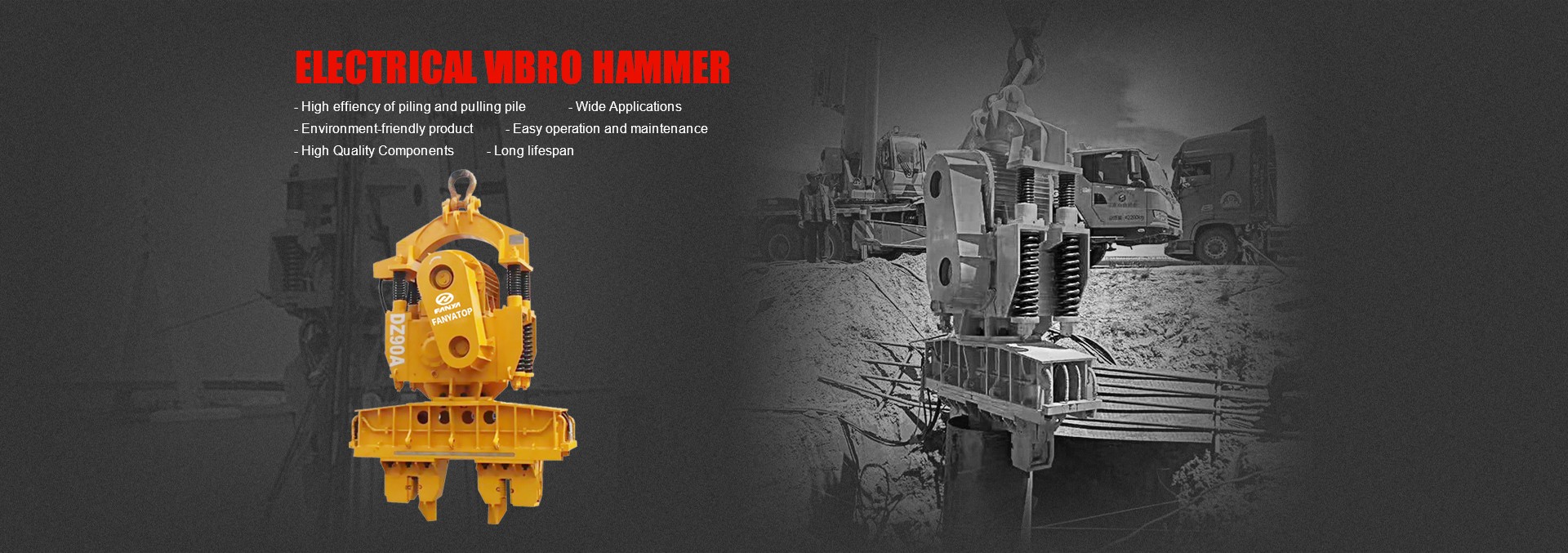
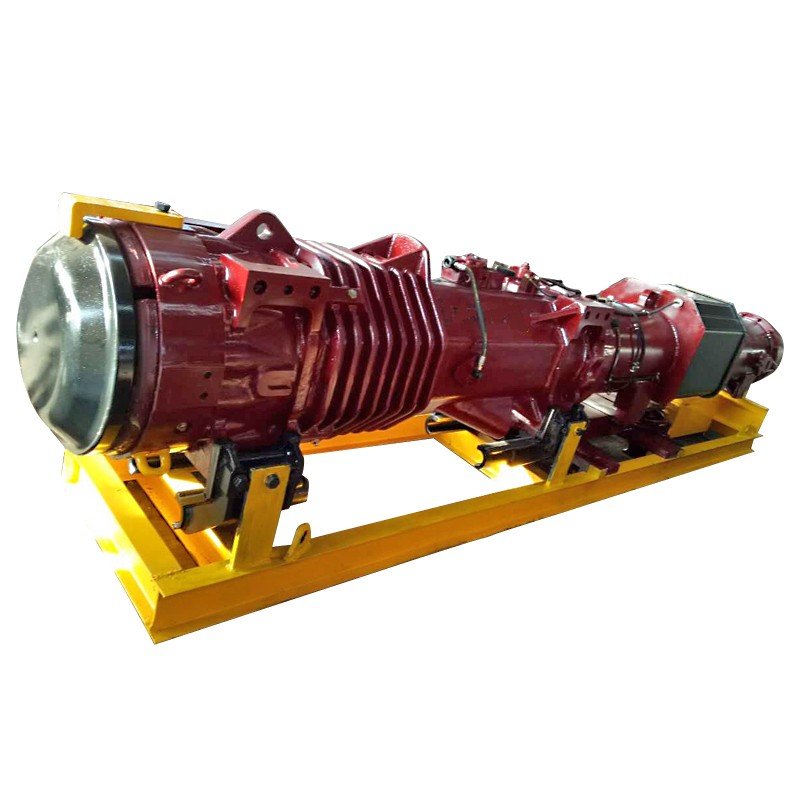
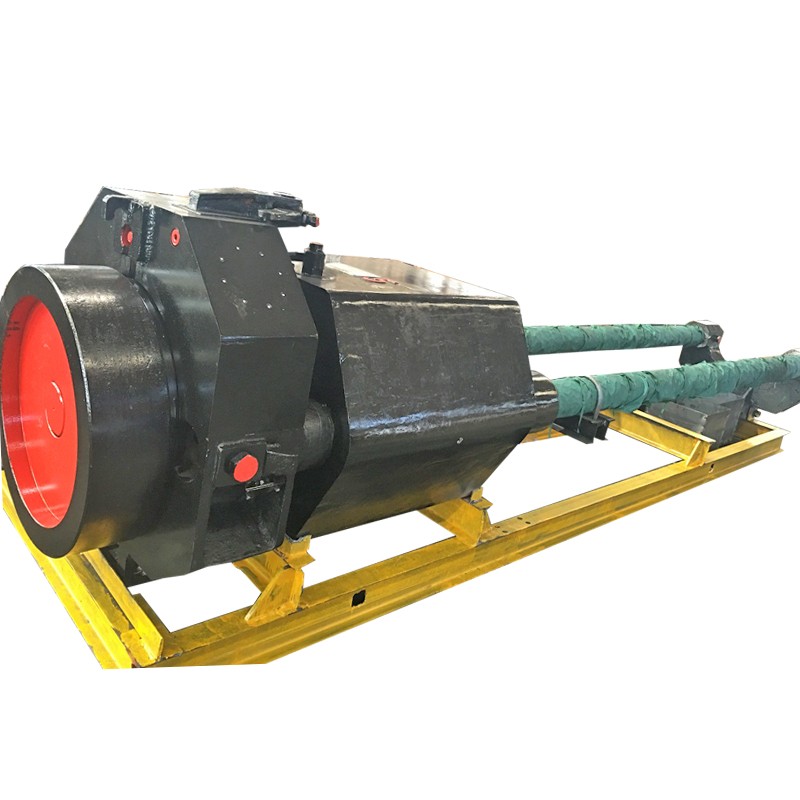
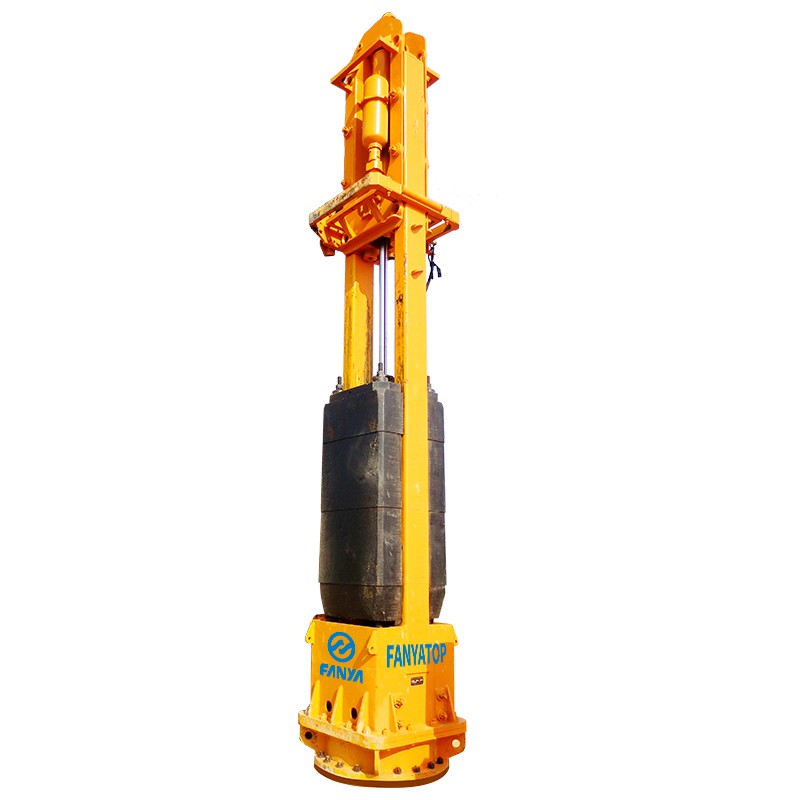
Have you ever watched a critical concrete placement grind to a halt because your vibrator hammer simply stopped working? The silence on the job site is deafening—and expensive. In the world of heavy construction, a failed vibrator hammer isn't just an inconvenience; it's a cascade of delays, rework, and lost revenue. But what if the problem isn't the tool itself, but how it's being used, selected, or maintained? This blog dives deep into the real reasons behind vibrator hammer failures and provides actionable, expert-backed solutions. Welcome to a no-nonsense guide from XUZHOU FANYA IMPORT&EXPORT CO.,LTD, your partner in precision concrete consolidation.
The Real Cost of Vibrator Hammer Failures
Every construction manager knows the pain: a critical slab pour is underway, and the vibrator hammer sputters, overheats, or simply stops. The scene is chaotic—workers scramble for backup units, concrete begins to set unevenly, and the risk of honeycombing skyrockets. The immediate cost? Lost labor hours and material waste. But the hidden costs are far worse: structural repairs, project delays, and damage to your reputation. Let's break down three specific pain points that plague the industry.
Pain Point 1: Downtime from Mechanical Failures
Imagine a high-rise foundation pour in downtown Chicago. The vibrator hammer, a critical piece of equipment, fails after just two hours of operation. The crew loses half a day waiting for a replacement. The concrete begins to set, and the structural engineer demands a costly core test to verify integrity. The result: a $15,000 delay and a strained client relationship. Mechanical failures often stem from poor bearing seals, overheating, or worn-out eccentric weights. In many cases, the root cause is improper lubrication or debris ingress.
Pain Point 2: Inconsistent Performance Leading to Rework
In a bridge deck project in Texas, a contractor used an older vibrator hammer that delivered uneven amplitude. The result was a section of concrete with poor consolidation—visible voids and weak spots. The owner rejected the work, forcing a $50,000 repair and a two-week schedule setback. Inconsistent performance is often due to voltage fluctuations, worn motor brushes, or incorrect frequency settings for the concrete mix.
Pain Point 3: High Maintenance and Replacement Costs
A mining operation in Western Australia runs vibrator hammers 24/7. Their fleet of 20 units requires constant repairs—bearing replacements, motor rewinds, and shaft realignments. Annual maintenance costs exceed $120,000, with each unit needing a full overhaul every 18 months. The frequent failures also increase spare parts inventory and labor costs. The culprit? Operating the hammers beyond their duty cycle or using them in abrasive environments without proper protection.
Solutions That Deliver Real Results
At XUZHOU FANYA IMPORT&EXPORT CO.,LTD, we've engineered solutions that address each of these pain points head-on. Our vibrator hammers are designed with sealed, maintenance-free bearings and high-temperature windings to prevent overheating. For inconsistent performance, we offer models with adjustable frequency and amplitude, allowing operators to match the tool to the concrete mix. And to reduce maintenance costs, we use modular components that can be replaced in minutes, not hours.
Solution 1: Advanced Bearing Seals and Cooling Systems
Our vibrator hammers feature labyrinth seals and double-lip seals that keep out dust and moisture, even in the harshest environments. An integrated cooling fan and heat-dissipating fins maintain optimal operating temperatures, reducing thermal stress. In a field test at a dam project in Brazil, our units ran for 500 hours without a single bearing failure—compared to 150 hours for competitors.
Solution 2: Smart Frequency Control
We've developed a patented frequency controller that automatically adjusts the vibration frequency based on concrete slump and temperature. This ensures optimal consolidation every time, eliminating voids and reducing rework. In a controlled test, our SmartVibe technology improved concrete density by 8% and reduced air voids by 60%.
Solution 3: Modular, Field-Replaceable Components
Our vibrator hammers are built around a core power unit that can be swapped out in under 10 minutes. The eccentric weight assembly, motor, and handle are all modular. This design reduces downtime from days to minutes and cuts spare parts inventory by 40%. A mining client in Chile reported a 70% reduction in maintenance labor hours after switching to our modular system.
Client Success Stories: Real Results from Around the World
Case Study 1: High-Rise Foundation in Dubai
Client: Al Futtaim Construction. Project: 50-story residential tower. Issue: Frequent vibrator hammer failures due to heat and dust. Solution: FANYA's heat-resistant model with sealed bearings. Result: Downtime reduced by 85%, project completed 2 weeks ahead of schedule. Quote from project manager Ahmed Rashid: "These hammers just keep going. We saved over $100,000 in delay costs."
Case Study 2: Bridge Deck in Germany
Client: Hochtief AG. Project: Autobahn bridge reconstruction. Issue: Inconsistent consolidation leading to rework. Solution: SmartVibe frequency-controlled hammers. Result: Rework reduced by 90%, concrete strength increased by 12%. Quote from structural engineer Klaus Mueller: "The density readings were perfect every time. No more core tests."
Case Study 3: Mining in Canada
Client: Teck Resources. Project: Underground mine shaft lining. Issue: High maintenance costs from abrasive slurry. Solution: Modular hammers with replaceable wear parts. Result: Maintenance costs cut by 60%, unit lifespan doubled. Quote from maintenance supervisor Jean-Pierre Leclerc: "We used to replace bearings weekly. Now we just swap the power unit in minutes."
Case Study 4: Dam Construction in Brazil
Client: Odebrecht. Project: Belo Monte Dam. Issue: Overheating in tropical climate. Solution: Enhanced cooling design. Result: Zero heat-related failures in 6 months of continuous operation. Quote from site manager Carlos Silva: "Even in 40°C heat, these hammers run cool. It's a game-changer."
Case Study 5: Precast Plant in USA
Client: Oldcastle Precast. Project: High-volume precast production. Issue: Frequent motor burnouts. Solution: High-torque, low-heat motor design. Result: Motor life increased by 300%, production output up by 15%. Quote from plant engineer Mike Johnson: "We've cut our motor replacement costs by $50,000 a year."
Applications and Partnerships
Our vibrator hammers are used in a wide range of applications: mass concrete pours, tunnel linings, precast elements, and underwater foundations. We supply major contractors like Bechtel, Vinci, and China State Construction. Our partnership with XUZHOU FANYA IMPORT&EXPORT CO.,LTD ensures global availability and local support. Whether you're building a skyscraper in New York or a dam in Laos, we have the right tool for the job.
Frequently Asked Questions
Q1: What is the optimal frequency for consolidating high-strength concrete?
A: For concrete with compressive strength above 50 MPa, a frequency of 150-200 Hz is recommended. Lower frequencies (100-120 Hz) work better for low-slump mixes. Our SmartVibe controllers automatically adjust to the mix design.
Q2: How do I prevent bearing failure in dusty environments?
A: Use hammers with labyrinth seals and regular grease intervals. Our sealed bearings require no maintenance for 500 hours. Replace seals if damaged.
Q3: Can I use a vibrator hammer for underwater concrete placement?
A: Yes, but you need a waterproof model with IP68 rating. Our submersible vibrator hammers are tested to 30 meters depth.
Q4: What is the typical lifespan of a vibrator hammer motor?
A: With proper maintenance, 2,000-3,000 hours. Our high-torque motors last up to 5,000 hours due to better cooling and winding insulation.
Q5: How do I choose between a pneumatic and electric vibrator hammer?
A: Pneumatic models are lighter and safer in explosive environments, but require an air compressor. Electric models offer consistent power and lower operating costs. For most construction, electric is preferred.
Conclusion: Your Next Step
Don't let vibrator hammer failures derail your projects. With the right technology and support from XUZHOU FANYA IMPORT&EXPORT CO.,LTD, you can achieve zero downtime, consistent quality, and lower costs. Download our technical whitepaper on advanced concrete consolidation, or contact our sales engineers for a free consultation. Let's build better, together.