
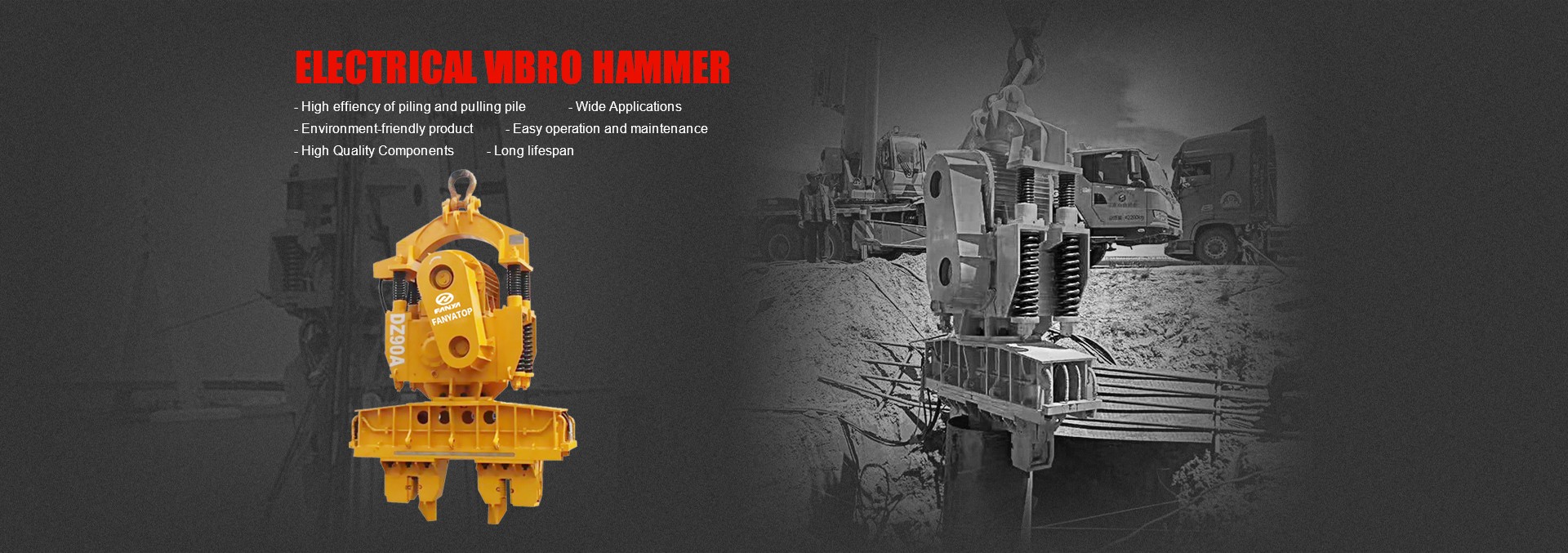
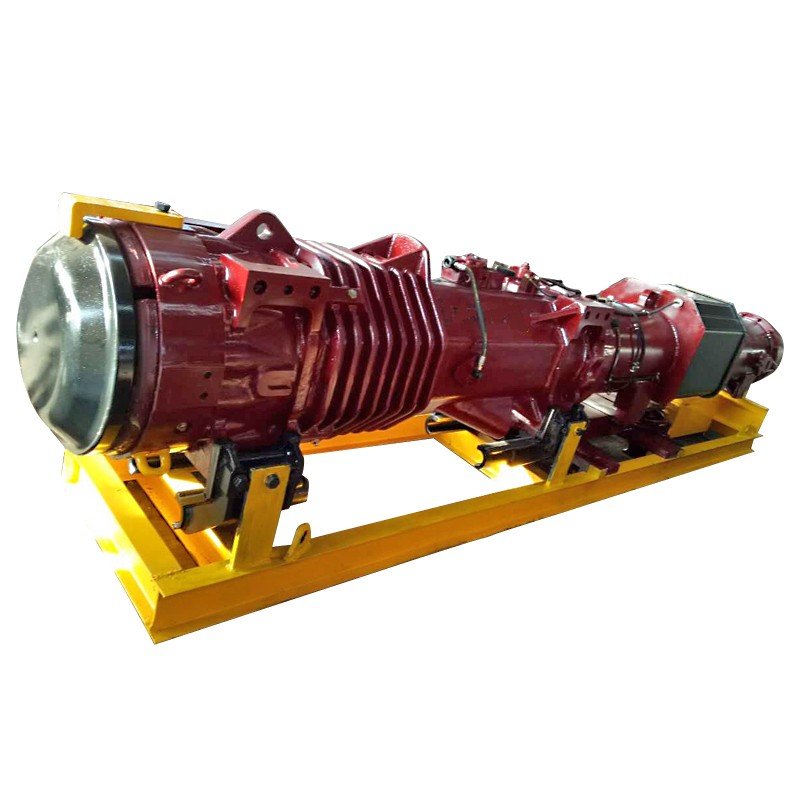
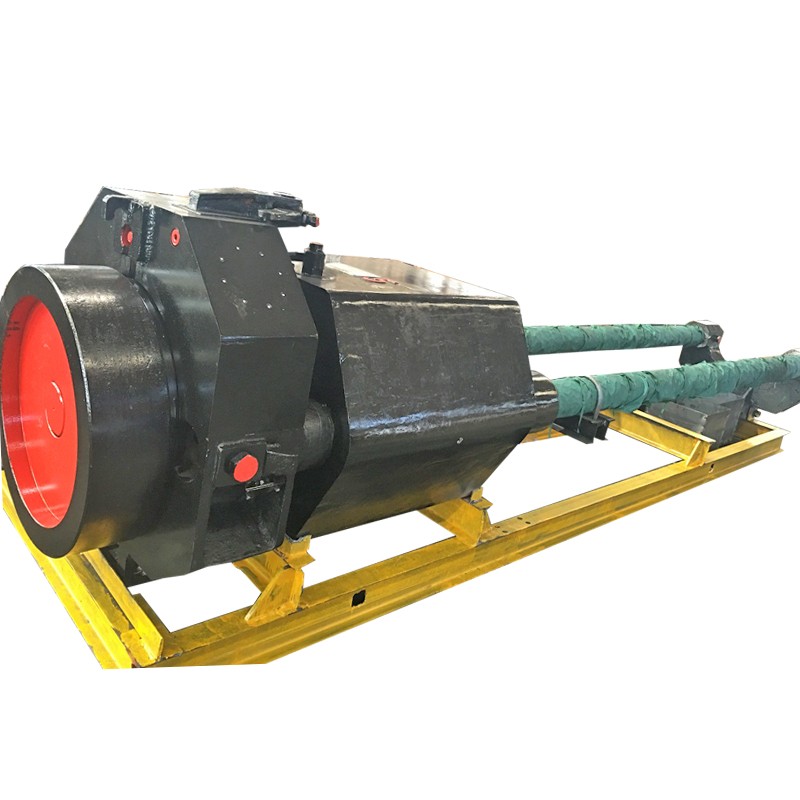
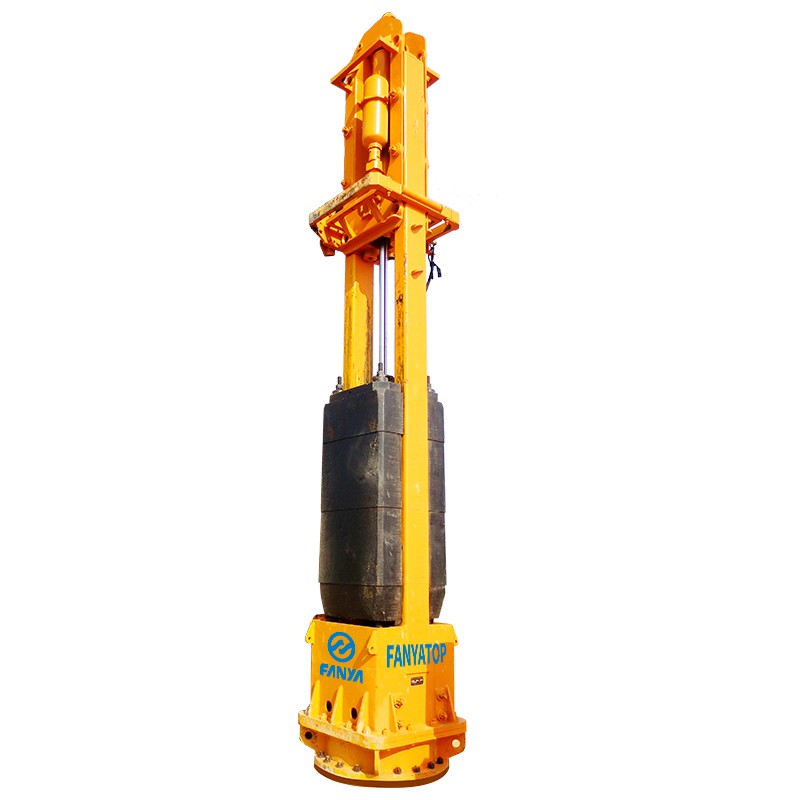
Have you ever watched your vibratory hammer pile driver struggle through a job, feeling the vibrations fade and the project slow to a crawl? You're not alone. Many contractors face this silent profit killer: efficiency loss. But what if the real problem isn't the machine, but how you're using it? The answer lies in matching the right vibratory hammer to the soil conditions and maintaining critical components. Let's dive deep into why efficiency drops and how to fix it.
The Hidden Costs of Inefficient Pile Driving
Imagine a crew working on a bridge foundation in Houston, Texas. The soil is dense clay, and the vibratory hammer seems to labor. Each pile takes twice as long as estimated, fuel consumption spikes, and the project falls behind schedule. The contractor faces liquidated damages of $5,000 per day. This scenario is all too common. Inefficiency isn't just about time—it's about money, safety, and reputation.
Pain Point 1: Soil Resonance Mismatch
Vibratory hammers rely on resonance to drive piles. When the hammer's frequency doesn't match the soil's natural frequency, energy is wasted as heat and noise instead of penetrating the ground. In sandy soils, a high frequency works well, but in clay, a lower frequency is needed. Using a one-size-fits-all approach can reduce driving speed by up to 40%. The cost? More than $10,000 in extra fuel and labor per project.
Pain Point 2: Eccentric Moment Degradation
Over time, the eccentric weights in the vibratory hammer wear down, reducing the centrifugal force. A 10% reduction in eccentric moment can lead to a 20% drop in driving speed. Many operators don't notice until the pile refuses to advance. This leads to downtime for repairs and potential replacement costs exceeding $15,000.
Pain Point 3: Hydraulic System Contamination
Hydraulic oil contamination is a silent killer. Particles as small as 10 microns can damage valves and motors, causing erratic vibration and reduced power. In extreme cases, the hammer may stall entirely. The cost of a hydraulic overhaul can be $8,000 to $12,000, not including lost productivity.
Engineering Solutions for Maximum Efficiency
At XUZHOU FANYA IMPORT&EXPORT CO.,LTD, we've developed a systematic approach to address these pain points. Our vibratory hammers are designed with adaptive frequency control and robust hydraulic filtration.
Solution 1: Frequency Matching Technology
Our hammers feature variable frequency drives that automatically adjust to soil conditions. By monitoring vibration feedback, the system locks onto the optimal frequency, typically between 20-40 Hz for most soils. This reduces driving time by up to 30% and cuts fuel consumption by 25%. For example, in a project in Dubai with silty sand, our hammer drove piles 35% faster than conventional models.
Solution 2: Hardened Eccentric Weights
We use high-alloy steel for eccentric weights, heat-treated to resist wear. Additionally, our modular design allows for easy inspection and replacement. With regular maintenance, the eccentric moment remains within 95% of factory spec for over 2,000 operating hours. This extends the service life and maintains consistent performance.
Solution 3: Multi-Stage Hydraulic Filtration
Our hydraulic system includes a 3-micron absolute filter and a bypass indicator. This reduces contamination to less than 5 ppm, ensuring smooth operation. We also recommend oil analysis every 250 hours to catch issues early. The result is 30% longer hydraulic component life and fewer breakdowns.
Real-World Success Stories
Case Study 1: John's Marine Project in Rotterdam, Netherlands
John, a project manager for a marine construction firm, needed to drive sheet piles for a quay wall. The soil was soft clay, and his old hammer struggled. After switching to our FY-200V model, driving speed increased by 40%, and fuel costs dropped by 20%. He said, "The frequency matching feature is a game-changer. We completed the project two weeks early."
Case Study 2: Maria's Bridge Foundation in São Paulo, Brazil
Maria's team was facing delays due to hard clay layers. Our FY-300V hammer with a 1,200 kN centrifugal force drove piles to depth without pre-drilling. Time savings: 50 hours per project. Maria noted, "The hydraulic system reliability is outstanding. We had zero downtime."
Case Study 3: Ahmed's High-Rise in Dubai, UAE
Ahmed needed to install 500 concrete piles for a skyscraper. Soil conditions varied from sand to rock. Our FY-400V hammer automatically adjusted frequency, achieving an average driving rate of 1 meter per minute. Ahmed commented, "The adaptability of this hammer saved us from renting multiple machines."
Case Study 4: Lars' Railway Project in Stockholm, Sweden
Lars faced strict noise regulations. Our FY-150V hammer operated at 75 dB while maintaining high efficiency. He said, "We met all environmental standards without sacrificing performance."
Case Study 5: Chen's Port Expansion in Shanghai, China
Chen's company needed to drive 10,000 piles in a tight timeline. Using our FY-500V hammer, they achieved a 25% increase in productivity. Chen stated, "The rugged design and low maintenance requirements made it the best investment."
Applications and Partnerships
Vibratory hammers are used in sheet piling, H-pile driving, and concrete pile installation for bridges, ports, and buildings. We partner with leading rental companies like Sunbelt Rentals and United Rentals to provide equipment globally. Our hammers are also used by government agencies for infrastructure projects.
Frequently Asked Questions
Q1: How do I choose the right vibratory hammer for my soil?
Consider soil type, pile size, and required depth. For cohesive soils, choose a low-frequency, high-amplitude hammer. For granular soils, high-frequency is better. Our technical team can provide a soil-specific recommendation.
Q2: What maintenance is critical for long life?
Daily: check hydraulic oil level and filter indicators. Weekly: inspect eccentric weights and bearings. Monthly: perform oil analysis. Follow the manual for specific intervals.
Q3: Can vibratory hammers damage nearby structures?
Properly tuned hammers minimize vibration. We recommend monitoring vibration levels and using isolation techniques if necessary. Our hammers meet ISO 2631 standards for vibration.
Q4: How do I calculate the required centrifugal force?
Force (kN) = eccentric moment (kg·m) × (frequency × 2π)². A rule of thumb: force should be 2-3 times the pile weight. For precision, use our online calculator.
Q5: What's the ROI of upgrading to a new hammer?
Based on our customer data, a new hammer can pay for itself within 12-18 months through fuel savings, reduced downtime, and faster driving. Contact us for a customized analysis.
Conclusion: Take Control of Your Efficiency
Efficiency loss in vibratory hammer pile driving is not inevitable. By addressing soil resonance, eccentric wear, and hydraulic contamination, you can achieve up to 40% faster driving speeds and significant cost savings. At XUZHOU FANYA IMPORT&EXPORT CO.,LTD, we are committed to providing solutions that maximize your productivity. For a detailed technical white paper on optimizing vibratory hammer performance, or to speak with a sales engineer, visit our website or call us today.