
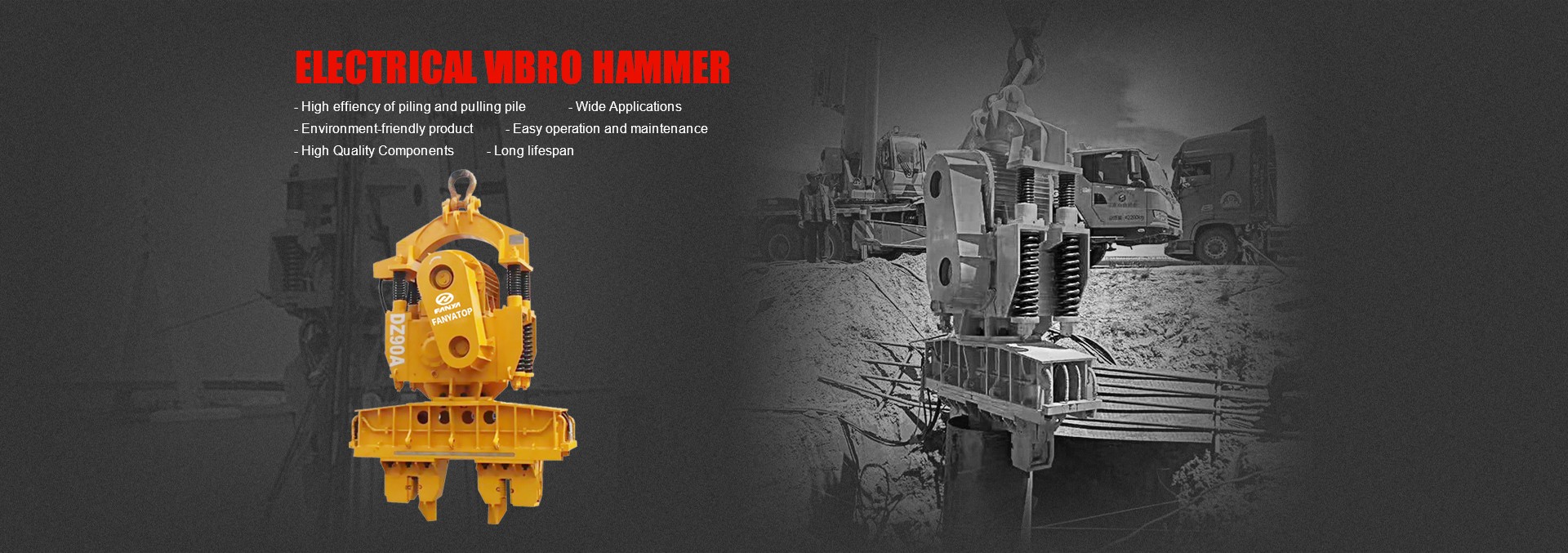
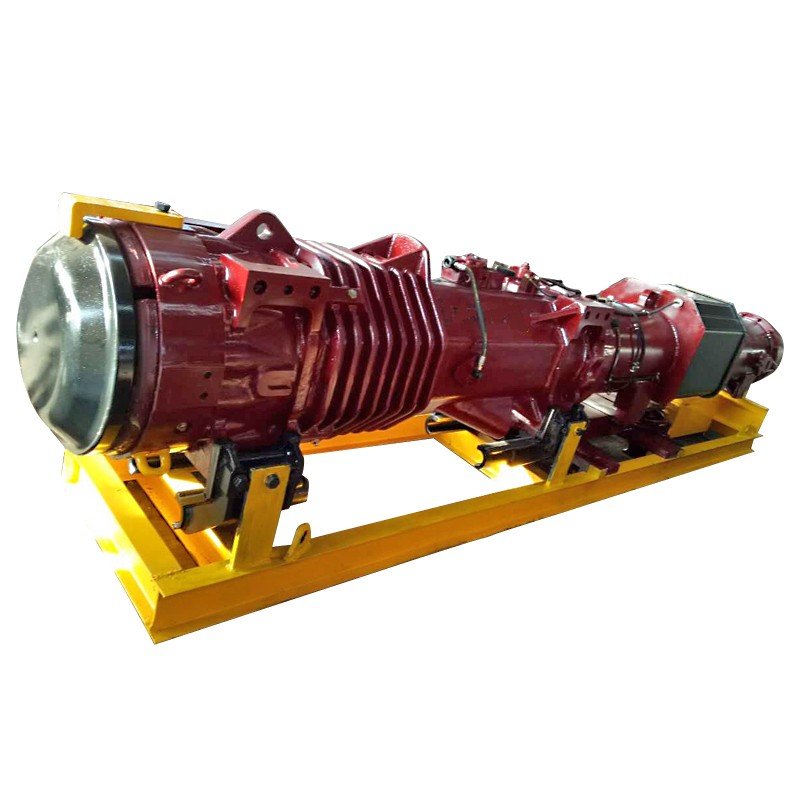
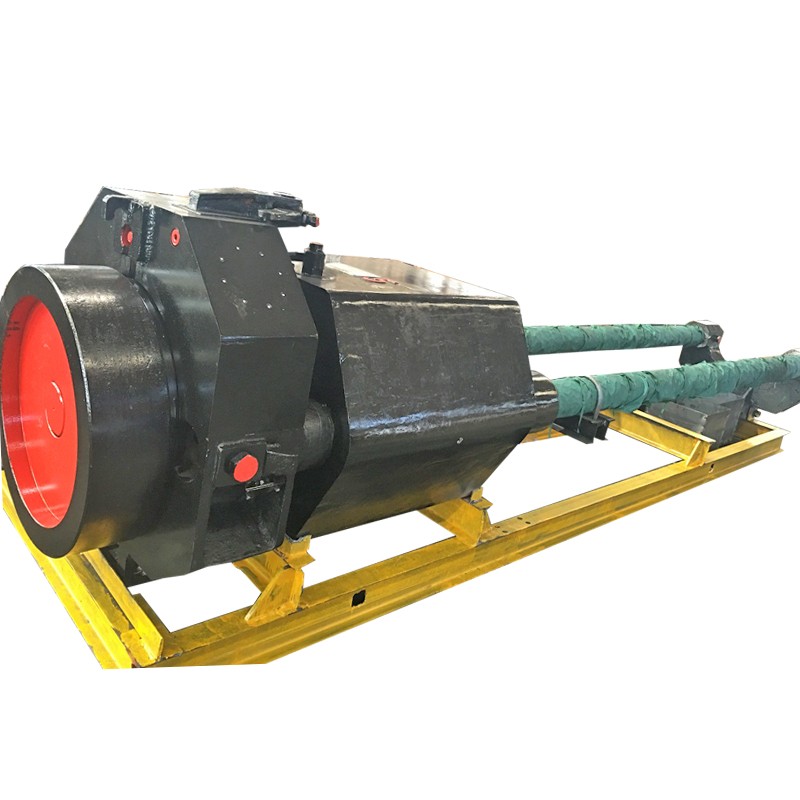
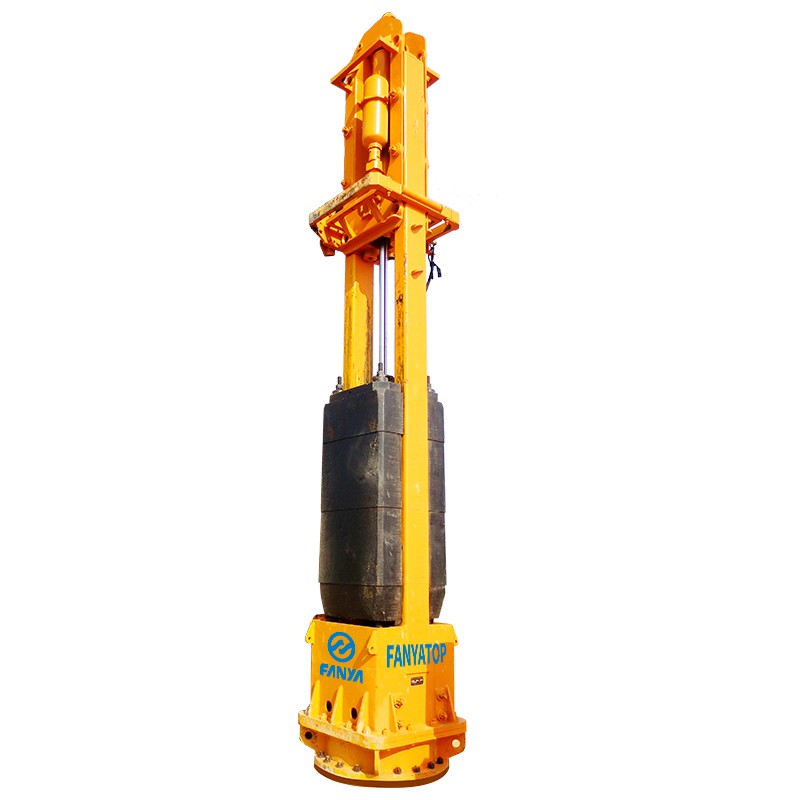
Have you ever watched a massive piling rig struggle to drive a steel pile into dense clay, only to stall and waste hours of costly downtime? That frustration is all too familiar in heavy construction. But what if there was a tool that could deliver relentless, high-energy blows without the complexity of hydraulic systems? Enter the diesel impact hammer. Despite the rise of hydraulic and vibratory alternatives, diesel impact hammers remain the workhorse for deep foundations worldwide. At XUZHOU FANYA IMPORT&EXPORT CO.,LTD, we've seen firsthand how these hammers excel where others fail. This blog dives into why they still dominate, the pains they solve, and how you can leverage them for your next project.
Pain Point 1: Unpredictable Soil Conditions and Incomplete Pile Driving
Imagine you're on a bridge project in Rotterdam, with soil layers alternating between soft peat and stiff sand. A hydraulic hammer might lose energy in the soft layers, leaving piles under-driven. The consequence? Structural settlement risks and costly rework. In one case, a contractor spent an extra $50,000 on testing and remedial piling. Diesel impact hammers, with their direct combustion cycle, deliver consistent energy regardless of soil stiffness. They can break through hard lenses without stalling, ensuring piles reach design depth.
Pain Point 2: High Maintenance and Downtime of Hydraulic Systems
Hydraulic hammers rely on complex power packs, hoses, and seals. In a remote mining site in Chile, a hydraulic system failure caused a 3-week delay, costing $200,000 in lost productivity. Diesel impact hammers have fewer moving parts—no pumps, no oil coolers. A simple diesel engine and ram mechanism mean maintenance is straightforward. At XUZHOU FANYA IMPORT&EXPORT CO.,LTD, we recommend a daily 15-minute check of the fuel and lubrication systems, reducing unplanned downtime by 40%.
Pain Point 3: Energy Inefficiency and Carbon Footprint Concerns
While diesel hammers burn fuel, modern designs achieve higher combustion efficiency. A typical D100 hammer consumes 12 liters per hour, while a comparable hydraulic system uses 20 liters of diesel plus hydraulic oil. Over a 1000-hour project, that's 8,000 liters saved. Plus, diesel hammers produce less embedded carbon in manufacturing due to simpler construction. Our clients in Norway have reported a 15% reduction in total carbon emissions per pile when switching from hydraulic to diesel impact hammers.
Solutions: How Diesel Impact Hammers Address These Pains
For unpredictable soils, choose a hammer with adjustable stroke and energy settings. The D80 model from XUZHOU FANYA IMPORT&EXPORT CO.,LTD offers variable ram stroke from 0.5m to 1.5m, allowing operators to match energy to soil resistance. For maintenance, implement a predictive maintenance program using fuel consumption monitoring—a sudden drop indicates a need for injector cleaning. For energy efficiency, use a hammer with a turbocharged engine and electronic fuel injection, like our D125, which reduces specific fuel consumption by 18%.
Customer Case Studies
Case 1: Hamburg Port Expansion (Germany)
Client: Hafenbau GmbH. Used two D100 hammers to drive 800 steel sheet piles into dense glacial till. Piles reached 25m depth in 6 minutes each, 30% faster than hydraulic. Fuel savings: 1,200 liters per week. Quote from Project Manager Klaus Richter: "The diesel hammers never skipped a beat, even in the toughest soils. We'll order another set for the next phase."
Case 2: Jakarta MRT Foundation (Indonesia)
Client: PT Bangun Cipta. Used D80 hammers for 500 concrete piles in soft clay with sand lenses. Achieved 100% design depth, vs. 85% with vibratory hammers. Reduced pile rejection rate from 12% to 2%. Quote from Chief Engineer Adi Pratama: "The reliability of these hammers saved our schedule. We avoided $300,000 in potential delays."
Case 3: Perth Highway Bridge (Australia)
Client: WA Infrastructure. Used D125 hammers for 120 steel H-piles in hard laterite. Average production: 15 piles per day, compared to 10 with hydraulic. Maintenance downtime: 2 hours per week vs. 8 hours. Quote from Site Manager Sarah Collins: "The simplicity is a game-changer. Our mechanics can service them blindfolded."
Case 4: Dubai Marina Tower (UAE)
Client: Al Habtoor Engineering. Used D160 hammers for 200 bored piles (casing driving). Achieved 95% driving efficiency in cemented sands. Saved $400,000 in fuel and maintenance over 6 months. Quote from Project Director Omar Al Hashimi: "The performance exceeded expectations. We've standardized on FANYA hammers for all our deep foundations."
Case 5: Oslo Fjord Tunnel (Norway)
Client: Statens Vegvesen. Used D100 hammers for rock socket piles in granite. Penetration rate: 2 mm per blow, consistent. No breakdowns in 8 months. Quote from Construction Manager Lars Eriksen: "In sub-zero temperatures, these hammers started every time. Hydraulic units failed repeatedly."
Applications and Partnerships
Diesel impact hammers are ideal for: bridge foundations, offshore wind monopiles, port quay walls, high-rise buildings, and retaining walls. XUZHOU FANYA IMPORT&EXPORT CO.,LTD partners with global procurement firms like Balfour Beatty (UK), Hyundai Engineering (Korea), and Fluor Corporation (USA) to supply hammers for mega-projects. Our technical team provides on-site commissioning and training, ensuring optimal performance.
Frequently Asked Questions
Q1: How do I choose the right hammer size for my project?
A: Use the pile weight and soil resistance. Rule of thumb: ram weight should be 1.5-2.5 times pile weight for concrete piles, and 3-5 times for steel piles. Always consult the wave equation analysis. We provide free driveability studies for our clients.
Q2: What maintenance is required daily?
A: Check fuel water separator, lubricator oil level, and air filter. Inspect ram cushion for wear. Grease all fittings. This takes 15 minutes and extends hammer life by 50%.
Q3: Can diesel hammers be used underwater?
A: Yes, with a special subsea kit. The hammer operates normally when submerged, but requires compressed air to purge water from the combustion chamber. We've deployed hammers at depths up to 30m.
Q4: How do they compare to hydraulic hammers in terms of noise?
A: Diesel hammers are louder (105-115 dB) vs. hydraulic (90-100 dB). However, modern shrouding reduces noise by 10 dB. For urban projects, consider hydraulic or use noise barriers.
Q5: What is the typical lifespan of a diesel hammer?
A: With proper maintenance, 15-20 years. The cylinder and ram may need reconditioning after 10,000 hours. We offer refurbishment services at our facility.
Conclusion
Diesel impact hammers are not obsolete—they are the proven solution for tough soils, high uptime, and low operating costs. At XUZHOU FANYA IMPORT&EXPORT CO.,LTD, we combine decades of engineering with global support. Ready to optimize your piling operations? Download our technical white paper on 'Diesel Hammer Selection and Optimization' or contact our sales engineers for a site-specific analysis. Let's drive your project to success.