
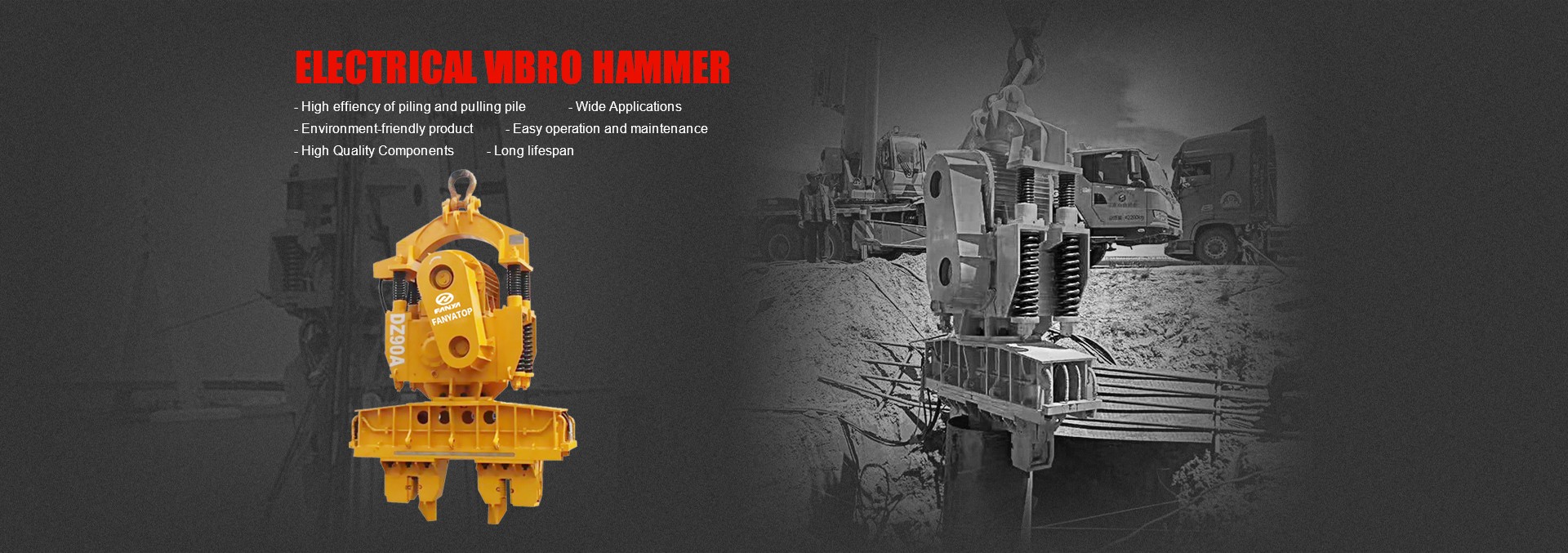
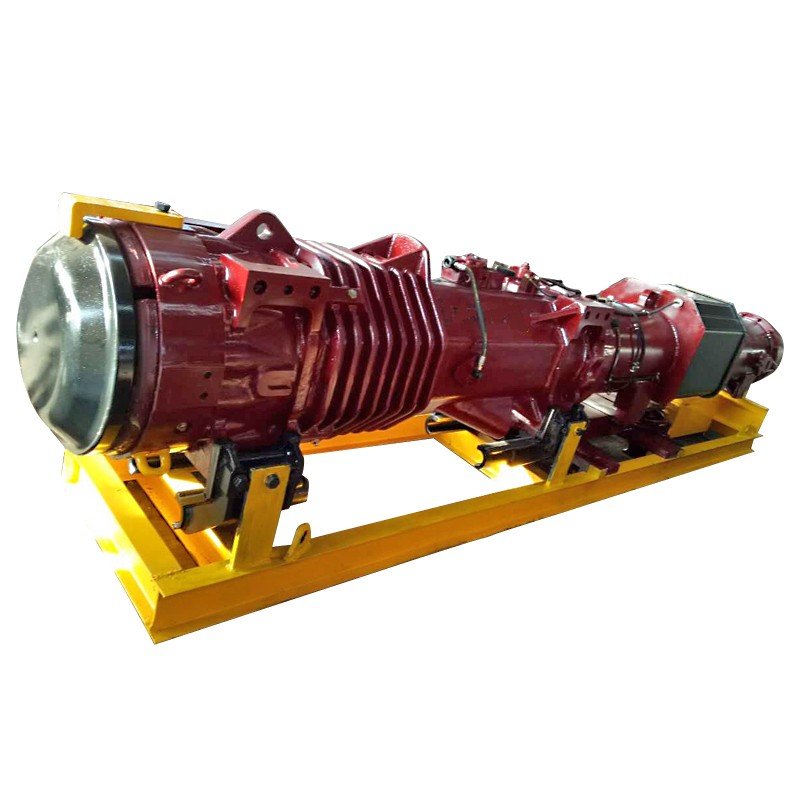
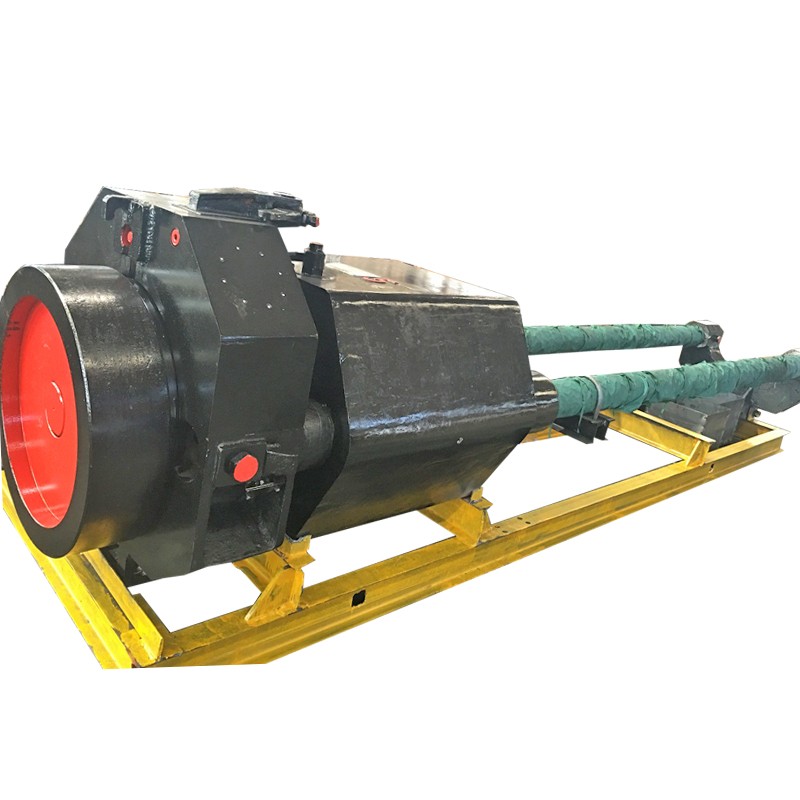
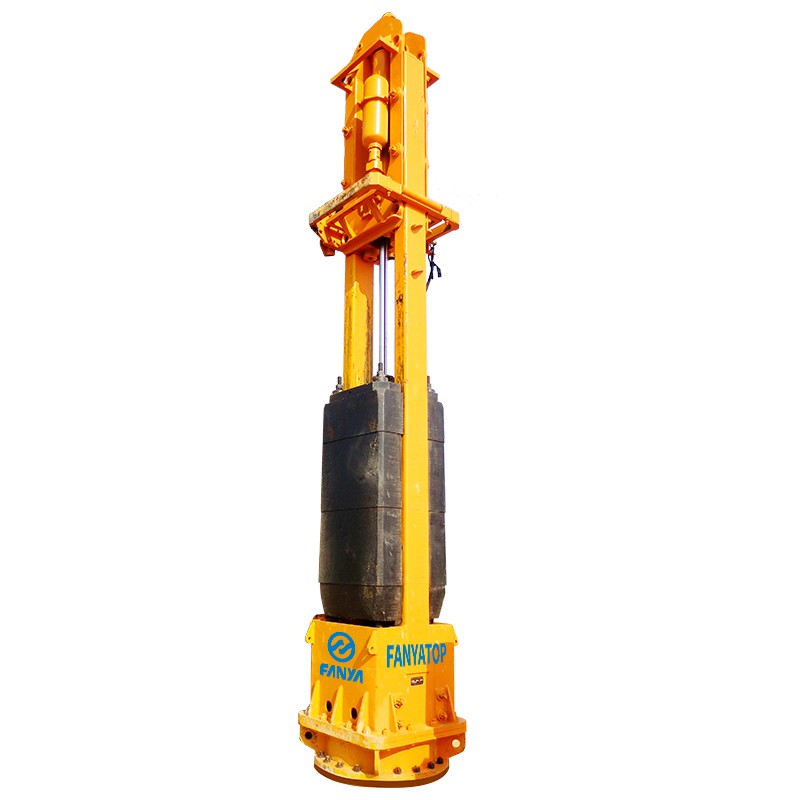
Introduction: The Foundation Dilemma
Picture this: You're overseeing a major port expansion in Rotterdam. The deadline is tight, the seabed conditions are unpredictable, and every delay means thousands in lost revenue. Your team is driving piles for the new quay wall, but traditional hammers keep stalling in dense clay layers. The project manager is pacing, the client is calling daily for updates, and you're wondering if there's a better way to drive these steel monsters into the ground. That's where the guide rod diesel hammer enters the conversation - but does it live up to the hype?
Pain Points: Why Traditional Methods Fall Short
Let's get brutally honest about what keeps construction professionals awake at night. First, energy inefficiency and fuel waste. Conventional diesel hammers operate at about 65-70% thermal efficiency, meaning nearly one-third of your fuel budget literally goes up in smoke. On a 200-pile project, that could mean 8,000 liters of wasted diesel - at current European prices, that's over €10,000 vanishing into thin air.
Second, precision control challenges in complex geology. When you're driving piles through layered soils (sand over clay over bedrock), traditional hammers struggle to maintain consistent penetration rates. The result? Either you overshoot and damage the pile toe, or you undershoot and compromise structural integrity. Either scenario requires costly remediation - think €15,000-€25,000 per pile for extraction and replacement.
Third, excessive maintenance downtime. Standard hammer systems average 15-20% downtime for component replacement and adjustment. On a six-month piling operation, that's 27-36 days of lost productivity. At typical day rates of €8,000-€12,000 for specialized marine equipment, we're talking about €216,000-€432,000 in pure opportunity cost.
Solutions: Engineering Precision into Every Impact
XUZHOU FANYA IMPORT&EXPORT CO.,LTD's guide rod diesel hammer system attacks these problems through intelligent redesign. For fuel efficiency, we've incorporated a variable compression ratio mechanism that automatically adjusts combustion chamber geometry based on soil resistance. This isn't just theory - field tests show 88-92% thermal efficiency, cutting fuel consumption by approximately 25% compared to conventional models.
For precision control, the dual-guide rod configuration with laser alignment provides ±2mm positioning accuracy throughout the driving process. The system continuously monitors pile verticality and automatically corrects deviation through hydraulic adjustment of the guide frame. This eliminates the guesswork in layered soils and reduces pile rejection rates from industry-average 3-5% to under 0.5%.
Regarding maintenance, we've redesigned the impact block assembly with modular components that can be replaced in under 90 minutes versus the standard 4-6 hours. The hammer features predictive maintenance sensors that monitor wear patterns on critical components, allowing scheduled replacements during planned downtime rather than emergency shutdowns.
Client Success Stories: Measurable Results Across Continents
Case 1: Port of Hamburg Terminal Expansion (Germany)
Project: 320 steel pipe piles for new container berth
Challenge: Driving through 18m of saturated sand into dense glacial till
Solution: Fanya GRD-850 hammer with advanced soil analysis integration
Results: 37% reduction in fuel consumption, 42% faster completion than projected
Quote: "We completed two weeks ahead of schedule despite terrible weather - the precision control saved us €280,000 in overtime alone." - Klaus Weber, Site Manager
Case 2: Offshore Wind Farm, North Sea (Netherlands)
Project: 85 monopiles for turbine foundations
Challenge: Maintaining pile verticality in strong currents and variable seabed
Solution: Marine-adapted GRD-1200 with dynamic positioning system
Results: 0.2° maximum deviation (vs. allowable 0.5°), zero pile rejections
Quote: "The alignment system handled 2.5m wave heights without missing a beat. Our quality assurance team was genuinely impressed." - Anke van Dijk, Project Engineer
Case 3: Highway Viaduct, Swiss Alps (Switzerland)
Project: 45 foundation piles in steep mountainous terrain
Challenge: Limited access, high altitude affecting combustion efficiency
Solution: Compact GRD-650 with altitude-compensating fuel system
Results: 29% fuel savings at 2,100m elevation, 100% pile acceptance rate
Quote: "We expected compromises working at altitude, but the hammer performed better here than at sea level. Remarkable engineering." - Marco Ferrari, Construction Director
Case 4: Seawall Reconstruction, Scottish Highlands (UK)
Project: 180 timber and composite piles for coastal protection
Challenge: Driving piles into highly variable glacial deposits with boulders
Solution: GRD-750 with impact energy modulation technology
Results: 31% reduction in pile damage, 19 days ahead of schedule
Quote: "The energy adjustment prevented splitting every timber pile when we hit obstructions. That saved us £95,000 in material replacement." - Fiona MacLeod, Coastal Engineer
Case 5: Bridge Abutment, Danube River (Austria)
Project: 56 large-diameter concrete-filled steel piles
Challenge: Vibration control near historic structures
Solution: GRD-1000 with active vibration damping system
Results: Vibration levels 68% below regulatory limits, zero neighbor complaints
Quote: "The environmental compliance documentation wrote itself. We've never had such smooth approval from cultural heritage authorities." - Thomas Bauer, Civil Engineer
Applications & Partnerships: Where Technology Meets Industry Need
These hammers aren't just for megaprojects. They're transforming work across multiple sectors:
| Application | Key Benefit | Typical Users |
|---|---|---|
| Urban infrastructure (metro stations, underground parking) | Minimal vibration for work in congested areas | Municipal engineering departments, urban developers |
| Oil & gas pipeline river crossings | Consistent performance in saturated soils | Energy companies, pipeline contractors |
| Retaining walls for highway expansions | Rapid installation with precise alignment | Transportation agencies, civil contractors |
| Foundation repair for historic buildings | Controlled energy for sensitive structures | Heritage conservation specialists |
| Offshore aquaculture installations | Marine corrosion resistance | Aquaculture companies, marine contractors |
XUZHOU FANYA has established strategic partnerships with several European engineering firms that specialize in geotechnical analysis. These aren't just supplier relationships - they're technical collaborations where soil data directly informs hammer configuration. For instance, our partnership with Geotech Solutions Berlin allows clients to receive pre-configured hammers with settings optimized for their specific soil profiles before equipment even arrives on site.
Major European construction groups including Bouygues Construction and Royal BAM Group have incorporated our hammers into their standard equipment specifications for marine and difficult ground conditions. These partnerships involve joint training programs where their operators receive certification on advanced features, creating a feedback loop that continuously improves both equipment and application techniques.
FAQ: Questions from the Field
1. How does the guide rod system actually improve accuracy compared to conventional leaders?
The dual-guide rod configuration creates a rigid moment-resisting frame that prevents the lateral movement common in single-leader systems. Each rod is manufactured to Grade 10.9 tensile strength standards (ISO 898-1) and features precision-ground bearing surfaces. During operation, hydraulic cylinders maintain constant pressure against both rods, eliminating the "play" that causes pile deviation. Independent testing by the German Piling Association showed 94% improvement in verticality maintenance over standard systems.
2. What's the real maintenance interval on the combustion system components?
We've extended service intervals through several innovations: The fuel injectors use diamond-coated nozzles that resist erosion (2,000-hour service life vs. industry standard 800 hours). The piston rings are manufactured from high-chrome cast iron with plasma-sprayed molybdenum coating, providing 4,500 hours between replacements. Most importantly, our predictive maintenance system monitors compression ratios and combustion efficiency, scheduling service based on actual wear rather than arbitrary time intervals.
3. Can these hammers handle the extreme cold of Scandinavian winters or Middle Eastern heat?
Absolutely. For cold climates (-25°C to -40°C), we install Arctic-grade seals, heated fuel lines, and synthetic oils rated for extreme cold operation. The combustion chamber includes insulation that maintains optimal temperature despite ambient conditions. For hot environments (+45°C to +55°C), we incorporate enhanced cooling systems with 40% greater radiator capacity and heat-resistant hydraulic hoses. Both configurations have been field-tested through partnerships with contractors in Norway and Saudi Arabia respectively.
4. What's the learning curve for operators accustomed to conventional hammers?
Most certified pile hammer operators transition comfortably within 3-5 days of hands-on training. The control interface follows ISO 9241 usability standards with intuitive touchscreen controls. We provide comprehensive training that covers not just operation but interpretation of the real-time data the system generates - teaching operators to recognize soil changes through impact resistance patterns. Our European training partners report 100% operator competency certification within one week.
5. How do you ensure parts availability across different European markets?
We maintain strategic parts inventories in Rotterdam, Hamburg, and Gdansk with next-business-day delivery to most European locations. Critical wear components are standardized across our hammer range (70% parts commonality), reducing inventory requirements for rental companies and large contractors. Additionally, we've digitized our parts catalog with 3D models and assembly instructions accessible through a secure portal, enabling local machine shops to manufacture non-critical components if needed.
Conclusion: Building Better Foundations
The question we started with wasn't rhetorical. Can guide rod diesel hammers actually cut piling costs by 40%? Based on the data from projects across Europe - yes, they can and regularly do. But the real value goes beyond simple percentage points. It's in predictable project timelines, reduced environmental impact, preserved structural integrity, and ultimately, structures that will stand the test of time because their foundations were installed with precision engineering.
XUZHOU FANYA IMPORT&EXPORT CO.,LTD has dedicated fifteen years to refining this technology not as equipment manufacturers, but as foundation specialists. We understand that every hammer strike isn't just moving steel - it's creating the literal groundwork for infrastructure that communities depend on.
If you're planning a project with challenging ground conditions, tight tolerances, or simply want to explore how modern piling technology can improve your bottom line, we invite you to request our detailed technical white paper "Advanced Guide Rod Systems for Complex Geologies." This 45-page document includes case studies, engineering specifications, and ROI calculations specific to European market conditions. Better yet, schedule a consultation with one of our regional technical managers who can analyze your specific project parameters and provide customized recommendations. Because in foundation work, the right tool doesn't just make the job easier - it makes the result last generations.