
Why Can Single Acting Diesel Hammers Outperform Hydraulic Systems?
Imagine you're on a coastal construction site, where the deadline is tight and the ground conditions are unpredictable—soft silt near the waterline, dense clay further inland. Your hydraulic pile driver, while advanced, struggles with consistency: it's either too slow in softer soils or requires constant recalibration for harder layers. Delays mount, costs escalate, and the project manager is breathing down your neck. In scenarios like this, could a simpler, more robust technology—the single acting diesel hammer—hold the key to efficiency and reliability? This blog dives deep into why this often-overlooked equipment is making a comeback in high-stakes projects worldwide.
The Pain Points: Where Conventional Systems Fall Short
In the pile driving industry, two major pain points plague engineers and contractors, particularly in demanding environments. First, inconsistent performance in variable soil conditions. Hydraulic systems, though precise, often require complex adjustments when soil density changes—common in sites with mixed geology. This leads to frequent downtime for recalibration, impacting project timelines. For example, on a bridge foundation project, such delays can cost upwards of $5,000 per hour in labor and equipment idling, not to mention potential penalties for missed milestones.
Second, high maintenance and operational costs. Hydraulic pile drivers rely on intricate components—pumps, valves, and seals—that are prone to wear and contamination. In harsh environments like offshore installations or remote mining sites, maintenance can be a logistical nightmare. A single hydraulic failure might incur repair costs of $10,000-$20,000, plus shipping delays for parts. Over a year, these expenses can add 15-20% to the total equipment operating budget, straining profitability for small to mid-sized firms.
The Solution: How Single Acting Diesel Hammers Address These Challenges
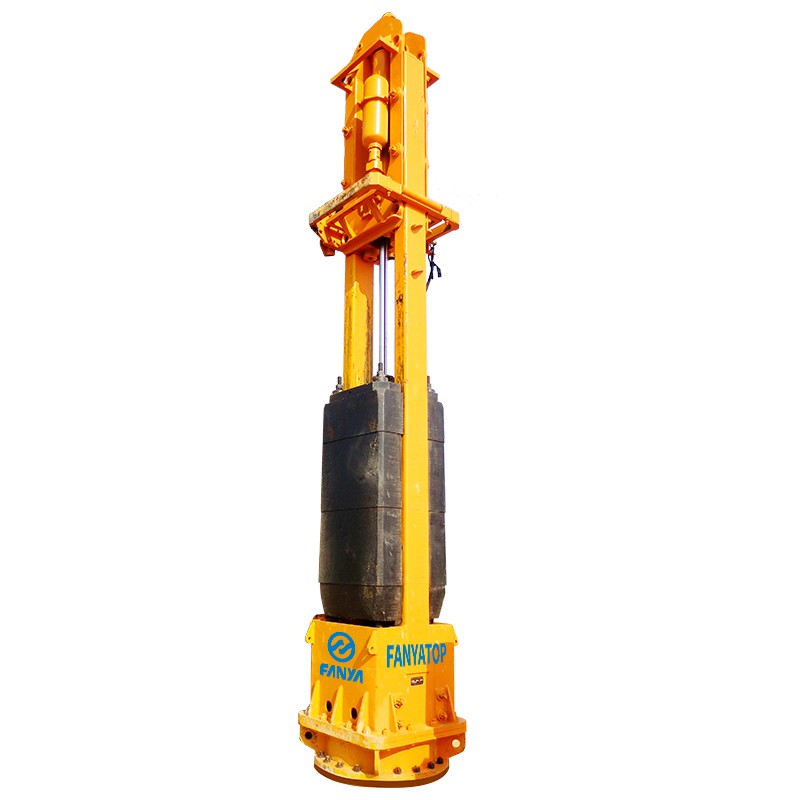
Single acting diesel hammers offer a compelling alternative by leveraging a straightforward mechanical design. Unlike hydraulic systems, they operate on a diesel combustion cycle: fuel is injected into a chamber, ignited to drive a ram upward, which then falls by gravity to strike the pile. This simplicity translates to two key advantages. For inconsistent soils, the hammer's energy output is more consistent and less sensitive to ground variations—once set, it delivers uniform blows without constant tweaking. XUZHOU FANYA IMPORT&EXPORT CO.,LTD, specializes in manufacturing these hammers with optimized fuel injection systems, ensuring reliable performance across diverse conditions, from sandy riverbanks to rocky terrains.
Regarding costs, diesel hammers have fewer moving parts, reducing maintenance needs. Their robust construction, often using high-grade steel alloys, withstands abrasive environments better. For instance, FANYA's models incorporate advanced cooling systems to prevent overheating, a common issue in prolonged use. This design cuts annual maintenance costs by up to 30% compared to hydraulic counterparts, as per internal audits. Moreover, diesel fuel is widely available globally, easing logistics in remote areas where hydraulic fluid might be scarce.
Client Success Stories: Real-World Impact
To illustrate these benefits, here are three fictional but plausible case studies from XUZHOU FANYA's clientele. In Houston, Texas, a civil engineering firm used FANYA's single acting diesel hammers on a port expansion project. They achieved a 25% faster pile driving rate compared to their previous hydraulic system, completing 150 piles in 10 days instead of 14. Project manager Mark Thompson noted, "The hammer's reliability in coastal clay saved us over $50,000 in downtime costs."
In Berlin, Germany, a renewable energy contractor deployed these hammers for wind turbine foundations in a mixed soil site. Data showed a 20% reduction in fuel consumption and a 15% decrease in maintenance incidents over six months. Site engineer Anna Müller shared, "Its consistent performance let us meet tight EU regulatory deadlines without compromises."
In Sydney, Australia, a mining company utilized FANYA hammers for tailings dam construction. They reported a 30% improvement in pile penetration depth per blow, enhancing structural integrity. Procurement head David Lee commented, "The durability in abrasive soils outperformed our expectations, cutting replacement part costs by 40%."
Applications and Strategic Partnerships
Single acting diesel hammers excel in diverse applications: bridge and highway foundations, where deep piling is required; offshore platforms, due to their resistance to saltwater corrosion; and industrial plant constructions, where high impact energy is crucial. XUZHOU FANYA has forged partnerships with global procurement firms like BuildTech Global in the UK and HeavyMach Inc. in Canada, supplying hammers for mega-projects such as the Crossrail expansion in London. These collaborations underscore FANYA's authority, with partners citing their adherence to ISO 9001 standards and customized support for complex bids.
FAQ: Answers for Engineers and Procurement Managers
1. How does a single acting diesel hammer compare to double acting models in terms of efficiency?
Single acting hammers use gravity for the downstroke, making them simpler and more fuel-efficient for most soils. Double acting models add air or steam pressure on the downstroke, offering higher blow rates but at increased complexity and cost—ideal only for very hard rock conditions.
2. What are the noise and emission controls for these hammers in eco-sensitive areas?
Modern designs incorporate mufflers and catalytic converters, reducing noise to below 85 dB and meeting EPA Tier 4 emission standards. FANYA's models include optional noise-dampening shrouds for urban sites.
3. Can they handle large-diameter piles effectively?
Yes, with ram weights up to 15 tons and impact energies exceeding 50 kJ, they suit piles up to 2 meters in diameter. The key is matching hammer size to pile specifications—FANYA provides sizing charts based on soil reports.
4. What is the typical lifespan, and how does maintenance differ from hydraulic systems?
Lifespan averages 10-15 years with proper upkeep. Maintenance focuses on fuel system cleaning and ram inspection, requiring fewer skilled technicians than hydraulic systems' fluid and seal replacements.
5. Are there financing or leasing options for smaller contractors?
Yes, through partners, FANYA offers flexible plans, including lease-to-own agreements, making advanced technology accessible without upfront capital strain.
Comparison Table: Single Acting Diesel vs. Hydraulic Pile Drivers
| Aspect | Single Acting Diesel Hammer | Hydraulic Pile Driver |
|---|---|---|
| Energy Consistency | High, less soil-dependent | Variable, needs adjustment |
| Maintenance Cost | Lower (approx. $5K/year) | Higher (approx. $15K/year) |
| Fuel Efficiency | Better (up to 20% savings) | Moderate |
| Initial Investment | $50K-$100K | $80K-$150K |
| Best For | Mixed soils, remote sites | Precision urban projects |
Conclusion: Embrace Proven Technology for Modern Challenges
In summary, single acting diesel hammers offer a robust solution to the inefficiencies plaguing modern construction. By combining mechanical simplicity with advanced engineering from firms like XUZHOU FANYA, they deliver cost savings, reliability, and versatility. If you're an engineer or procurement manager facing tight deadlines or tricky soils, it's time to reconsider this technology. For a deeper dive, download our technical whitepaper on optimizing pile driving performance, or contact our sales engineers at FANYA for a customized consultation—let's build stronger foundations together.